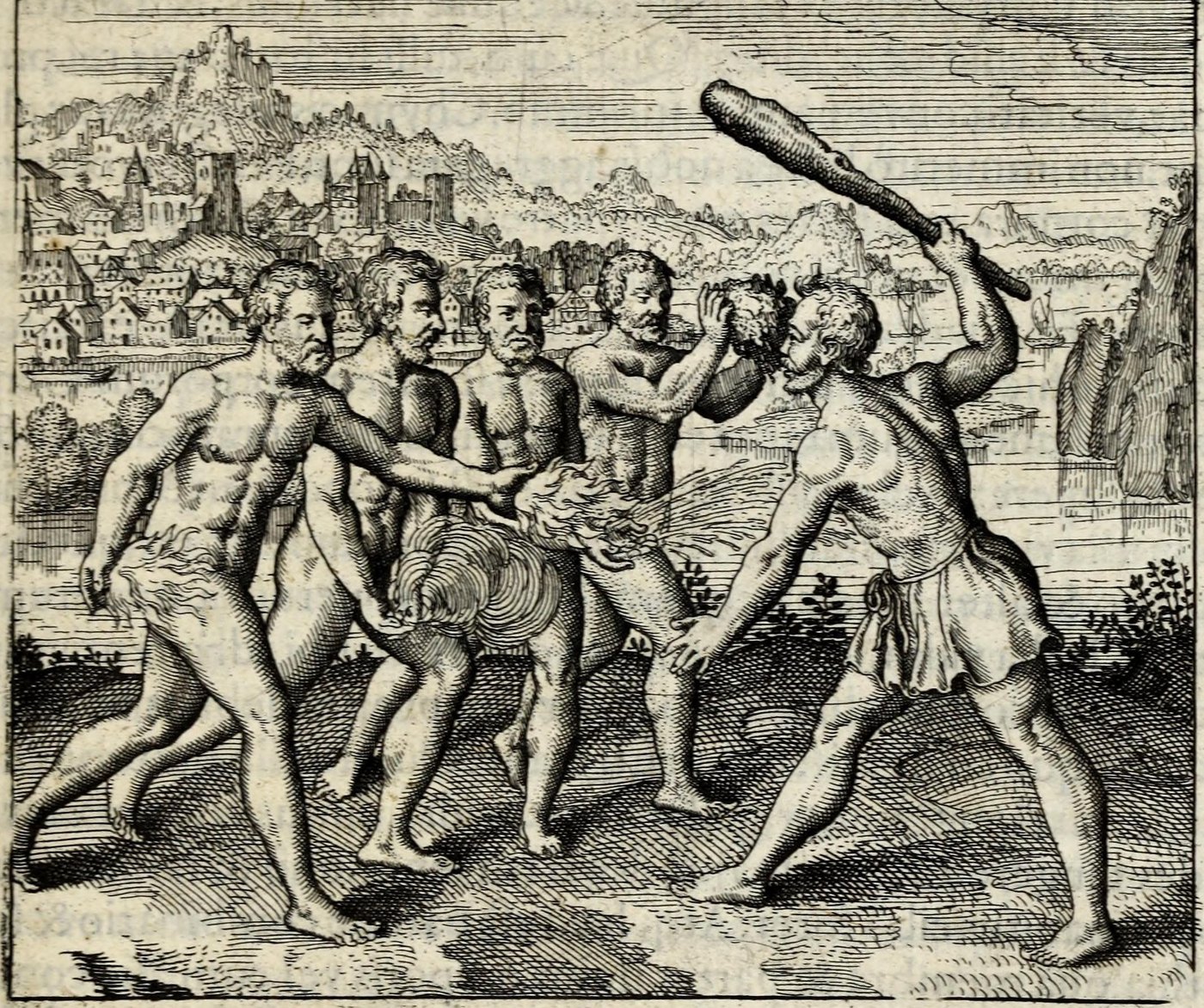
Si de quattuor unum Occidas, subitò mortuus omnis erit
Death and the Skull as the central motif. From Atalanta Fugiens.
What is happening
Michael Maier, 1618 “Si de quattuor unum Occidas, subitò mortuus omnis erit.”
Symbolica, 2026 Maier’s Latin, put into English here: Kill one of the four and all at once are dead.
Michael Maier, 1618 “Bis duo stant fratres longo ordine, pondera terrae
Quorum unus dextra sustinet, alter aquae:
Aeris atque ignis reliquis est portio, si vis
Ut pereant, unum tu modo morte premas:
Et consanguineo tollentur funere cuncti,
Naturae quia eos mutua vincla ligant.”
Symbolica, 2026 Maier’s epigram, put into English here: Twice two brothers stand in a long row. One holds the weight of earth in his right hand, another that of water; to the rest belong the shares of air and of fire. If you want them to perish, press only one of them down with death, and all will be carried off in a kindred funeral, because the mutual bonds of nature tie them together.
Key · 1 motif
Tap a motif on the picture, or a line below. Its note opens under the line, with the reading its author gave it.
- Primary motif
The picture
Four naked men, one striking another down with a club. By eye
The reading
The picture read whole, in the archive's words, from the sources quoted on the marks. Read on, and the picture follows: the motif under discussion keeps its colour.
‘Si de quattuor unum Occidas, subitò mortuus omnis erit’: if you kill one of the four, all at once will be dead. Four naked men stand in a row and a fifth swings a club at the nearest, with a town and the sea behind them.
‘Bis duo stant fratres longo ordine’, twice two brothers stand in a long row, and Maier deals out the elements to them: one holds the weight of earth in his right hand, another that of water, ‘Aeris atque ignis reliquis est portio’, to the rest belong the shares of air and of fire. Then the instruction: ‘si vis / Ut pereant, unum tu modo morte premas’, if you want them to perish, press only one of them down with death, ‘Et consanguineo tollentur funere cuncti’, and all will be carried off in a kindred funeral, ‘Naturae quia eos mutua vincla ligant’, because the mutual bonds of nature tie them together.
The death here is not an ending but a method. The four elements in the matter are so bound that to break one is to break all, and the club is the operation that does it.
Decoded: every motif is marked, and each mark carries the reading its author gave it, quoted from the text, or says that it is observed on the picture and not read. The reading above is the archive's own, made from those sources and no others.
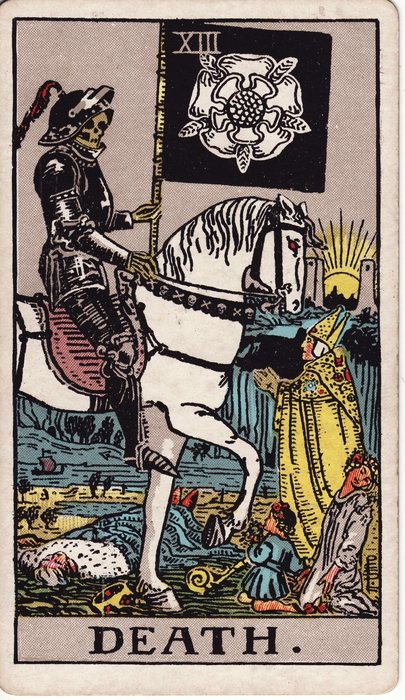
An office, not an ending. Note what Death is holding and who is being made to look at it.
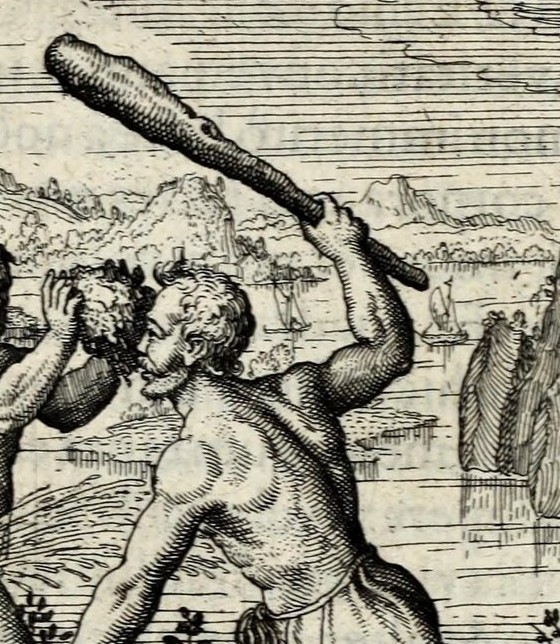
In plain words A man raises a club over four naked brothers. They are the four elements, earth, water, air and fire, bound to one another, and Maier's point is that you need only kill one: the others die with him, because nature has tied them together.
Michael Maier, 1618 “Aeris atque ignis reliquis est portio, si vis / Ut pereant, unum tu modo morte premas:”
Symbolica Maier's Latin, put into English here: to the rest belong the shares of air and of fire. If you want them to perish, press only one of them down with death,
Also carrying Death and the Skull
13 works carry it. The 6 where it is the central motif are here. The symbol.
In the same series
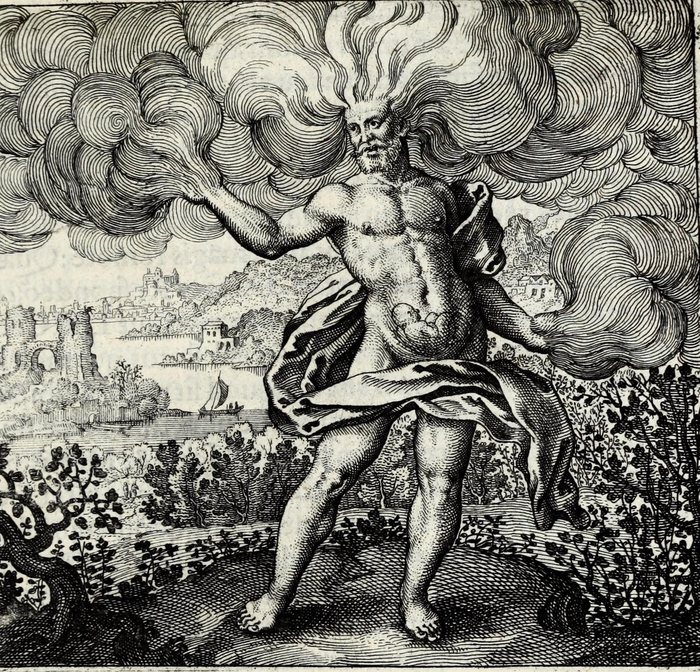 Portavit eum ventus in ventre suo
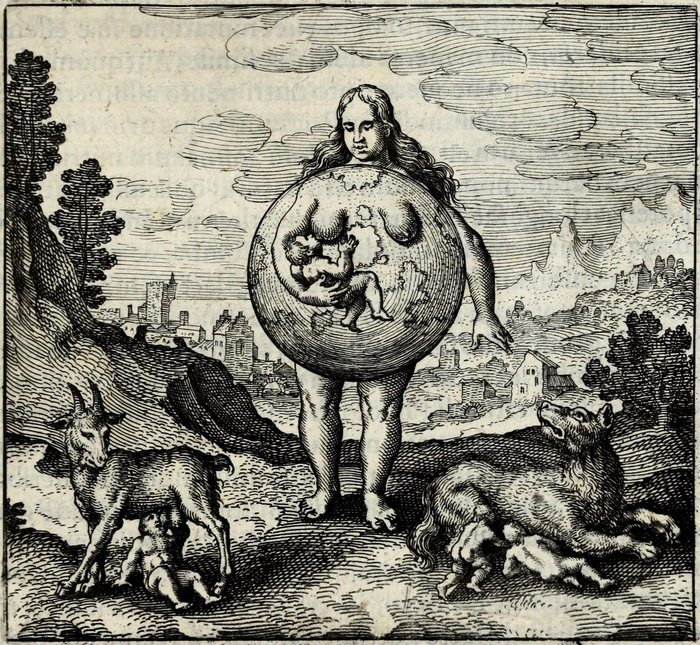 Nutrix ejus terra est
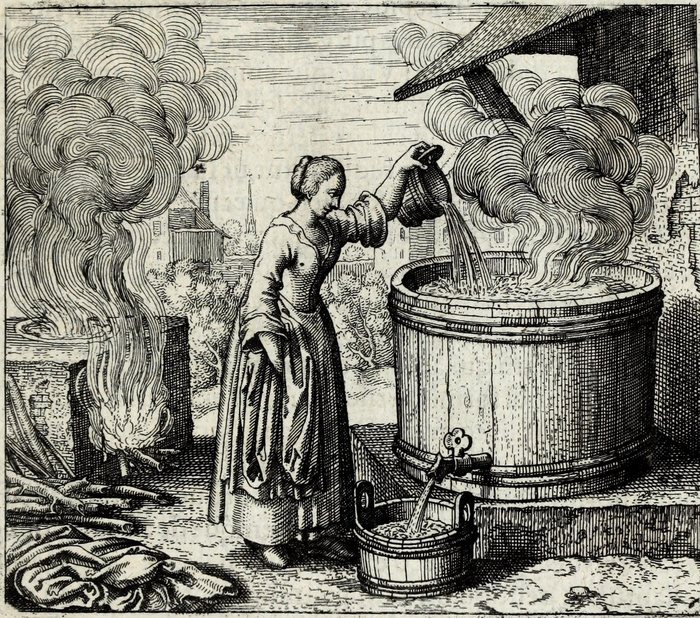 Vade ad mulierem lavantem pannos, tu fac similiter
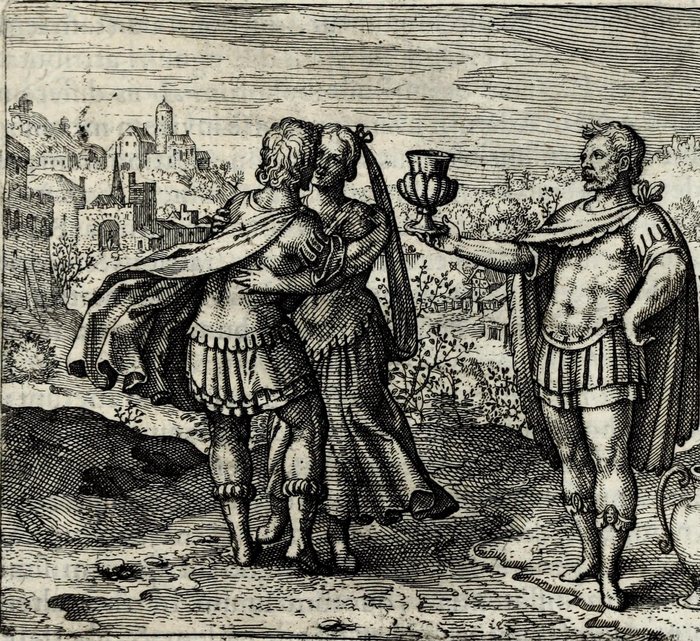 Conjunge fratrem cum sorore & propina illis poculum amoris
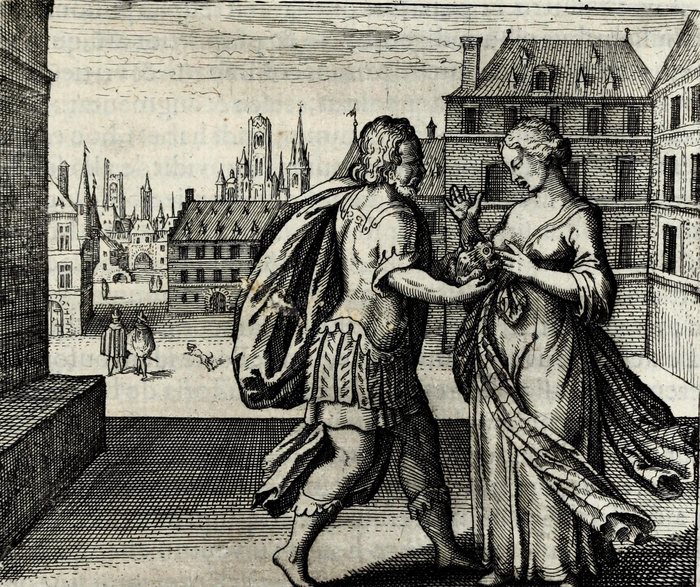 Appone mulieri super mammas bufonem, ut ablactet eum, & moriatur mulier, sitque bufo grossus de lacte
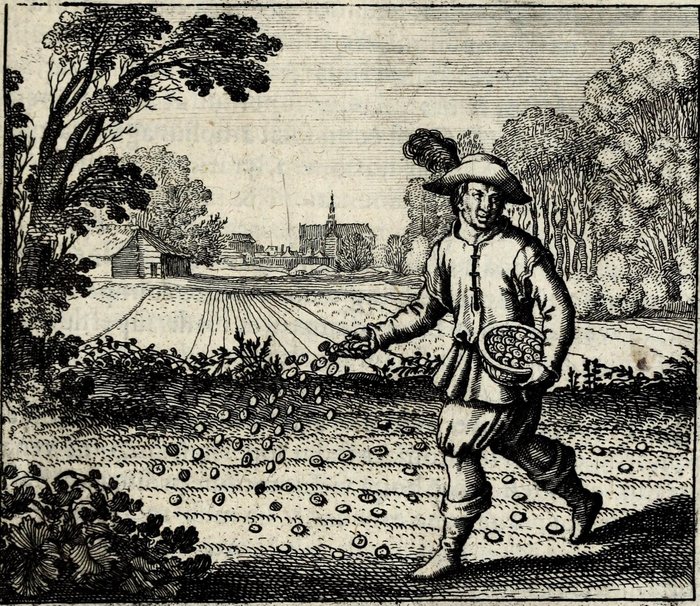 Seminate aurum vestrum in terram albam foliatam
Record
One symbol a week, decoded.
This picture is free at full size from its source, linked above. What an address gets is the Sunday letter: one picture, one symbol marked on it, what it meant and who said so, and the master files of the decoded plates as they are verified. Leave any time.
Free, one letter a week, unsubscribe in one click. How the address is used.
Scroll or pinch to zoom · drag to move · double-tap for 1:1 · 1400 by 1172 pixel web copy; the source file is linked under Record