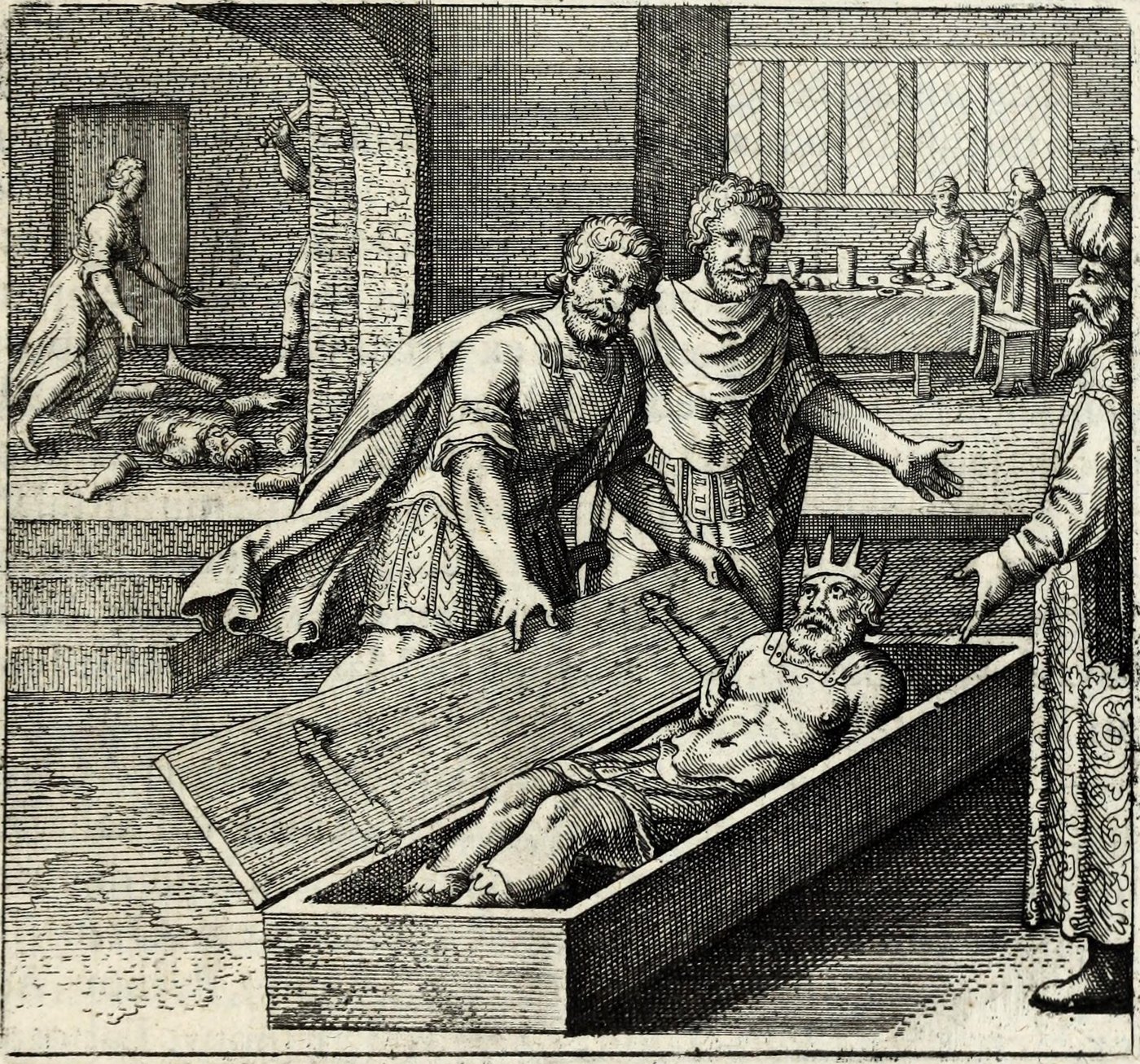
Dolo Typhon Osyridem trucidat, artúsque illius Hinc inde dissipat, sed hos collegit Isis inclyta
Death and the Skull as the central motif, with the King and the Queen in a secondary part. From Atalanta Fugiens.
What is happening
Michael Maier, 1618 “Dolo Typhon Osyridem trucidat, artúsque illius Hinc inde dissipat, sed hos collegit Isis inclyta.”
Symbolica, 2026 Maier’s Latin, put into English here: Typhon kills Osiris by a trick and scatters his limbs, but glorious Isis gathered them.
Michael Maier, 1618 “Syria Adonidem habet, Dionysum Graecia, Osirim
Aegyptus, qui sunt nil nisi SOL Sophiae:
Isis adest soror, & conjunx ac mater Osiris,
Cujus membra Typhon dissecat, illa ligat.
Defluit at pudibunda mari pars, sparsa per undas,
Sulphur enim, SULPHUR quod generavit, abest.”
Symbolica, 2026 Maier’s epigram, put into English here: Syria has Adonis, Greece Dionysus, Egypt Osiris, and these are nothing but the SUN of the Sages. Isis is there, sister and wife and mother of Osiris, whose limbs Typhon cuts apart and she binds together. But the shameful part floats away to sea, scattered through the waves, for the Sulphur that begot the SULPHUR is missing.
Key · 2 motifs
Tap a motif on the picture, or a line below. Its note opens under the line, with the reading its author gave it.
- Primary motif
- Secondary motifs · 1
The picture
The crowned body in the open coffin, the killers around it, Isis gathering at the back. By eye
The reading
The picture read whole, in the archive's words, from the sources quoted on the marks. Read on, and the picture follows: the motif under discussion keeps its colour.
‘Dolo Typhon Osyridem trucidat, artúsque illius Hinc inde dissipat, sed hos collegit Isis inclyta’: Typhon kills Osiris by a trick and scatters his limbs here and there, but glorious Isis gathered them. A crowned corpse in an open coffin, the men who did it standing round, and at the back a woman picking up what is left.
Maier begins by saying that the dead god has three names: ‘Syria Adonidem habet, Dionysum Graecia, Osirim / Aegyptus’, Syria has Adonis, Greece Dionysus, Egypt Osiris, ‘qui sunt nil nisi SOL Sophiae’, and these are nothing but the sun of the sages. Adonis was two emblems ago; this is the same death in Egyptian dress. ‘Isis adest soror, & conjunx ac mater Osiris’, Isis is there, sister and wife and mother of Osiris, ‘Cujus membra Typhon dissecat, illa ligat’, whose limbs Typhon cuts apart and she binds together.
The body in the coffin is the sun of the work, dismembered so that it can be put together again. One part is not recovered: ‘Defluit at pudibunda mari pars, sparsa per undas’, but the shameful part floats away to sea, scattered through the waves, ‘Sulphur enim, SULPHUR quod generavit, abest’, for the sulphur that begot the sulphur is missing. The queen gathers everything but the seed, and the emblem is about what a dismemberment costs.
Decoded: every motif is marked, and each mark carries the reading its author gave it, quoted from the text, or says that it is observed on the picture and not read. The reading above is the archive's own, made from those sources and no others.
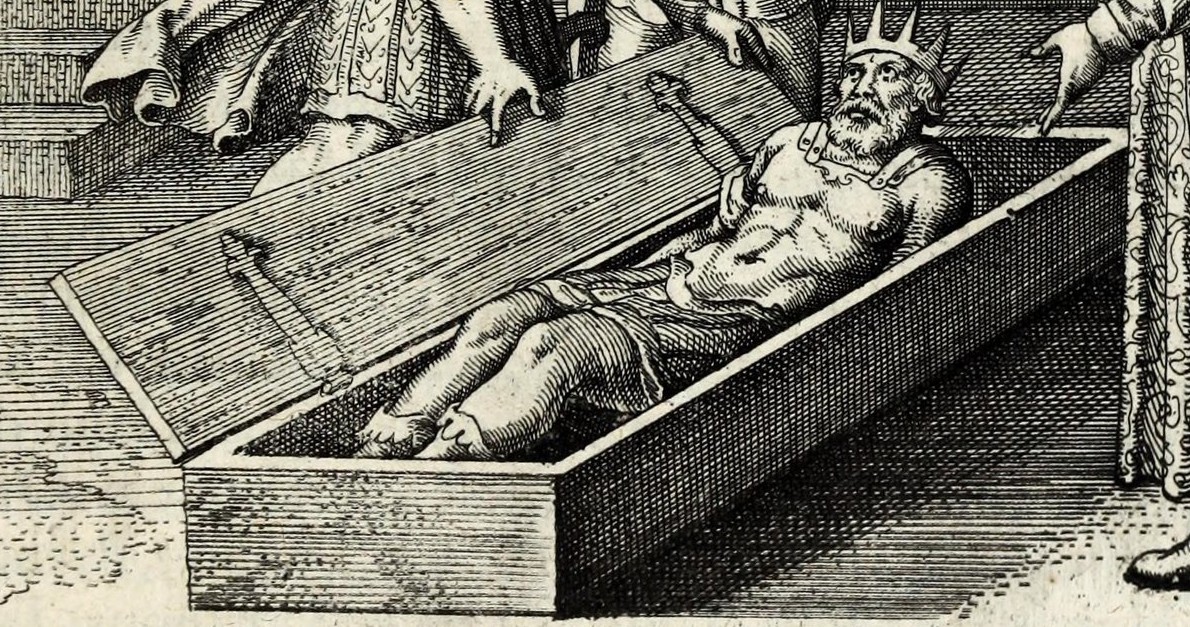
An office, not an ending. Note what Death is holding and who is being made to look at it.
In plain words A crowned man lies in an open coffin with his killers standing over him. He is Osiris, cut apart by Typhon, and Maier says in the first couplet what he is: Syria's Adonis, Greece's Dionysus and Egypt's Osiris are all the Sun of the sages, killed and put together again.
Michael Maier, 1618 “Isis adest soror, & conjunx ac mater Osiris, / Cujus membra Typhon dissecat, illa ligat.”
Symbolica Maier's Latin, put into English here: Isis is there, sister and wife and mother of Osiris, whose limbs Typhon cuts apart and she binds together.
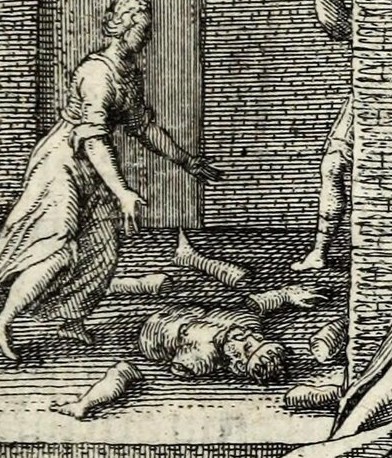
A rank rather than a person. Read the robe, the throne and what comes out of the mouth before you read the face.
In plain words The king in the coffin is Osiris, and the woman at the back gathering pieces from the floor is Isis, his sister, wife and mother in one. She binds together what Typhon cut apart, all but one part, which floated away to sea. The queen's work here is reassembly.
Michael Maier, 1618 “Syria Adonidem habet, Dionysum Graecia, Osirim / Aegyptus, qui sunt nil nisi SOL Sophiae:”
Symbolica Maier's Latin, put into English here: Syria has Adonis, Greece Dionysus, Egypt Osiris, and these are nothing but the SUN of the Sages.
Also carrying Death and the Skull
13 works carry it. The 6 where it is the central motif are here. The symbol.
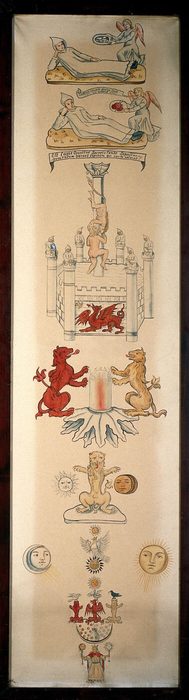
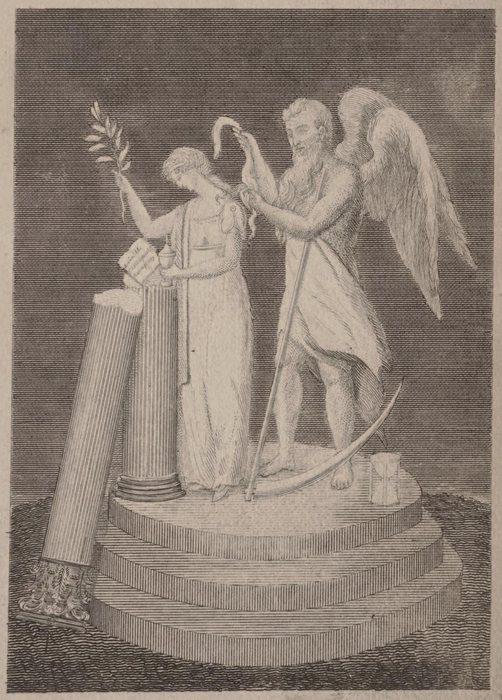
Where the detail is the subject
This is in the picture without being what it is about. Below, one work that is about it.
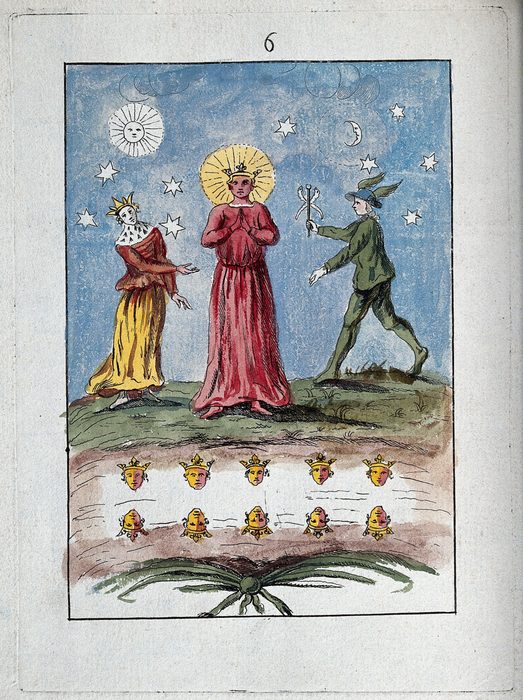
In the same series
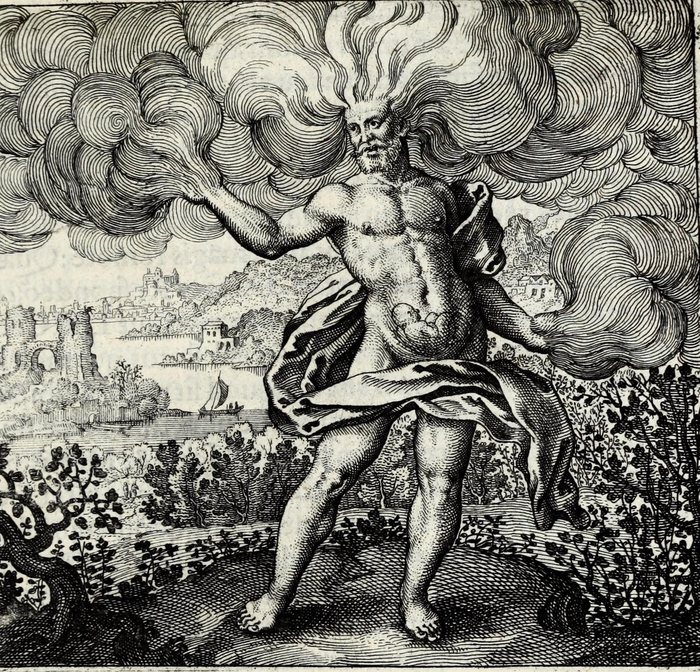 Portavit eum ventus in ventre suo
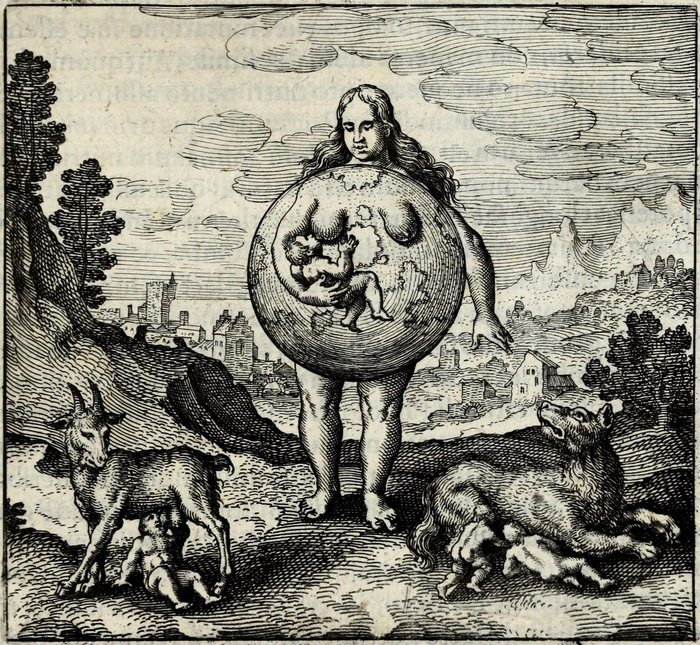 Nutrix ejus terra est
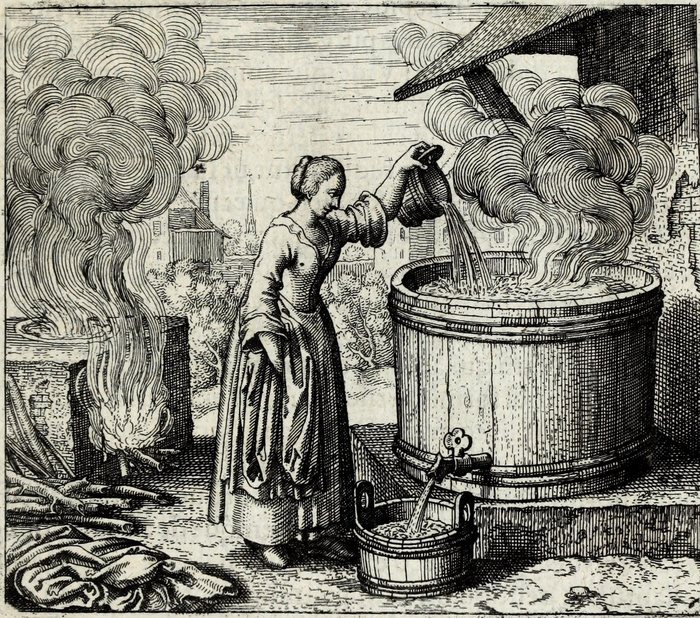 Vade ad mulierem lavantem pannos, tu fac similiter
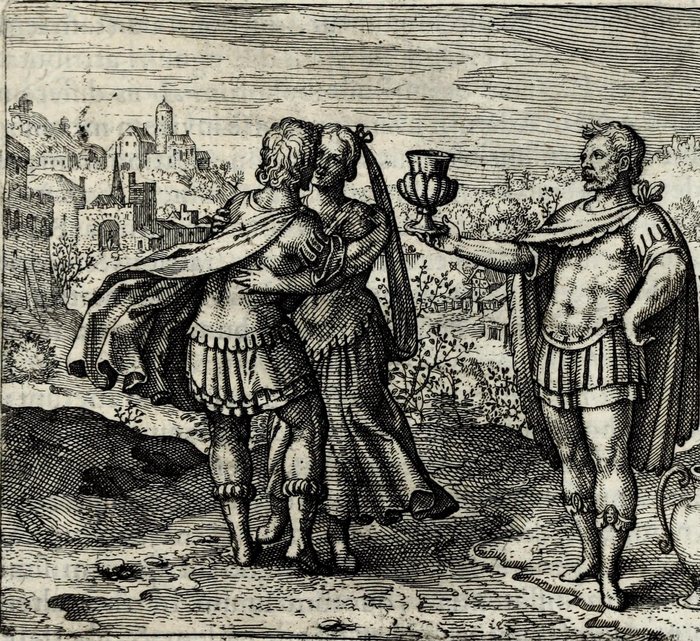 Conjunge fratrem cum sorore & propina illis poculum amoris
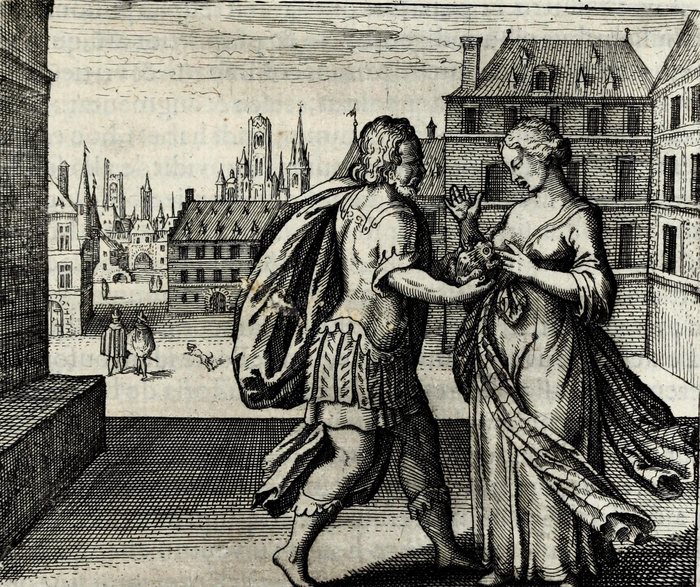 Appone mulieri super mammas bufonem, ut ablactet eum, & moriatur mulier, sitque bufo grossus de lacte
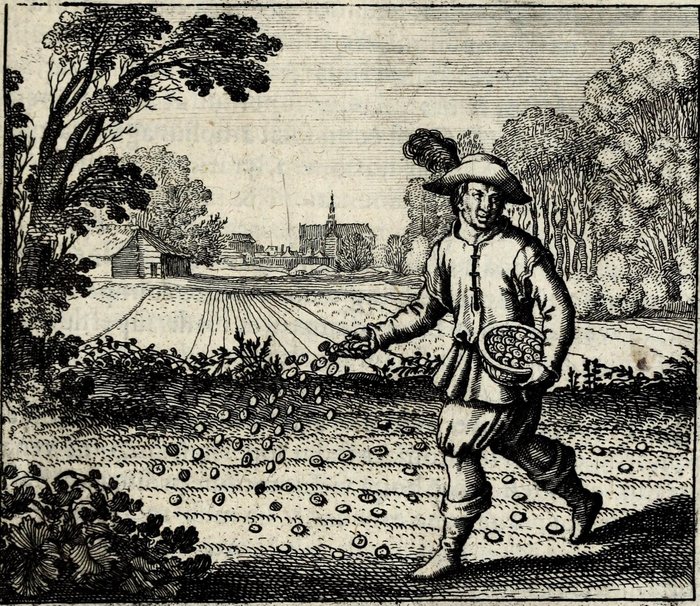 Seminate aurum vestrum in terram albam foliatam
Record
One symbol a week, decoded.
This picture is free at full size from its source, linked above. What an address gets is the Sunday letter: one picture, one symbol marked on it, what it meant and who said so, and the master files of the decoded plates as they are verified. Leave any time.
Free, one letter a week, unsubscribe in one click. How the address is used.
Scroll or pinch to zoom · drag to move · double-tap for 1:1 · 1400 by 1307 pixel web copy; the source file is linked under Record