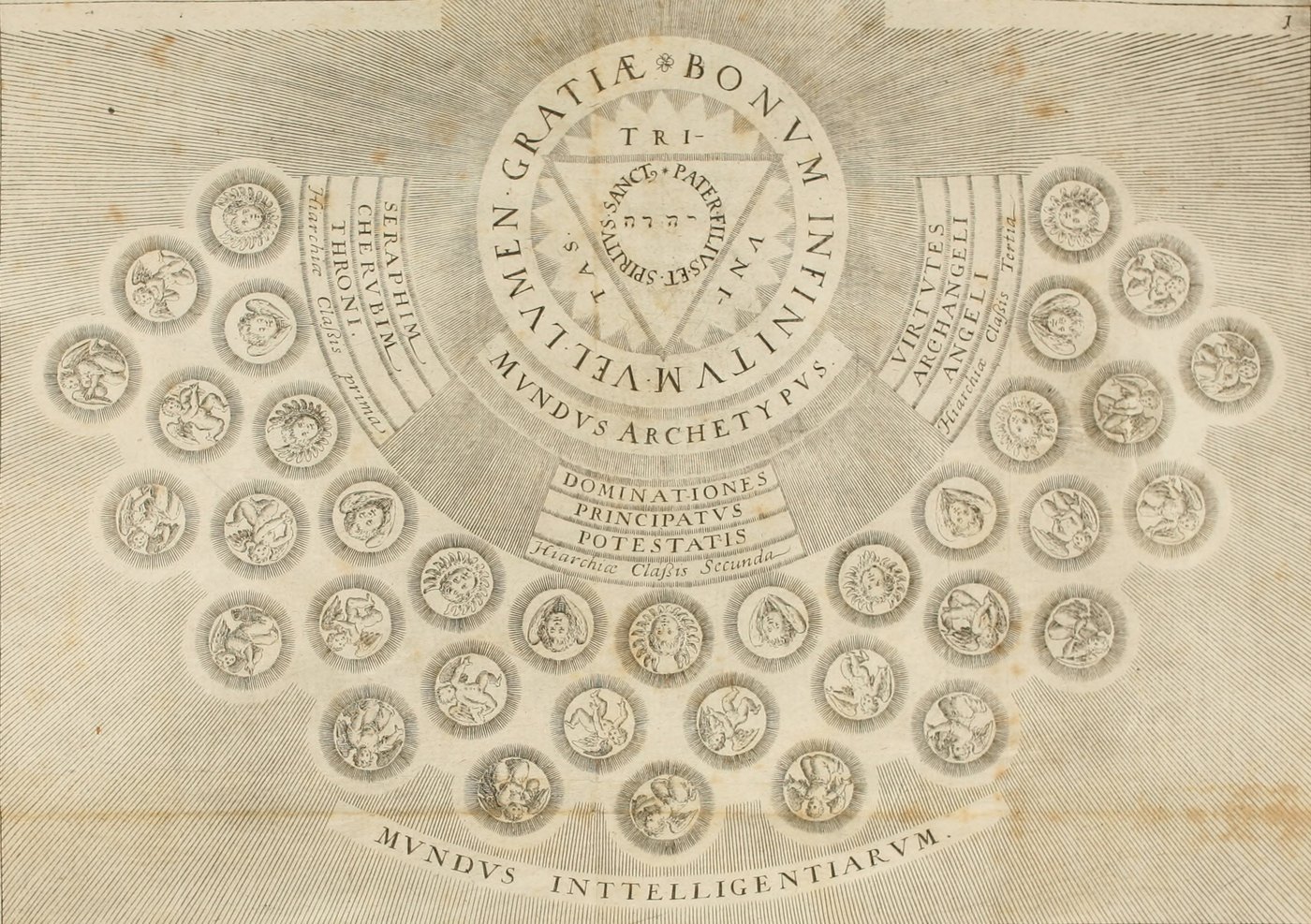
The archetypal world and the nine orders of angels
The Angel and the Wing as the central motif, with the Divine and the Heavens in a secondary part. From Musaeum Hermeticum.
What is happening
The plate, 1678 “BONVM INFINITVM VEL LVMEN GRATIAE.”
Symbolica, 2026 The plate's Latin, put into English here: The infinite Good, or the light of grace.
The plate, 1678 “SANCTVS, SANCTVS, SANCTVS DOMINVS EXERCITVVM: OMNIS TERRA REPLETA EST GLORIA EIVS.”
The Book of Isaias “Holy, holy, holy, the Lord God of hosts, all the earth is full of his glory.”
The plate, 1678 “Marcellus Palingenius in Zod. Vit. Lib. IX.”
Symbolica, 2026 The plate names where its verses come from and leaves the picture unexplained. Palingenius wrote the Zodiacus Vitae, a Latin poem in twelve books; the ninth is the one the printer drew on. Nothing in the letterpress names a single order of angels. The names are all on the engraving.
Key · 3 motifs
Tap a motif on the picture, or a line below. Its note opens under the line, with the reading its author gave it.
- Primary motif
- Secondary motifs · 2
The picture
Three banners naming nine orders of angels, a triangle with the Name inside it, rank on rank of winged heads in their own bursts of rays, and two worlds named in arcs above and below. By eye
The reading
The picture read whole, in the archive's words, from the sources quoted on the marks. Read on, and the picture follows: the motif under discussion keeps its colour.
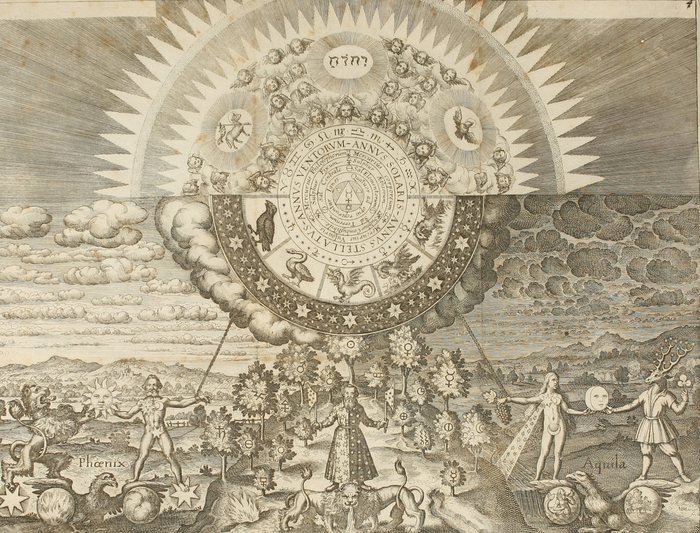
Four large sheets fold into the back of the Musaeum Hermeticum, lettered FIGURA I to FIGURA IV, each engraved above its own printed explanation. This is the first, and it draws the world above the stars as one diagram: a Trinity at the centre, three banners of names, and rank on rank of winged heads fanning out and downward from it.
The banners do the work a caption usually does. On the left, “SERAPHIM. CHERVBIM. THRONI. Hiarchiae Classis prima.” Under the centre, “DOMINATIONES. PRINCIPATVS. POTESTATIS. Hiarchiae Classis Secunda.” On the right, “VIRTVTES. ARCHANGELI. ANGELI. Hiarchiae Classis Tertia.” Nine orders, three to a class, lettered on the picture where a reader can check them against the book.
Check them and they do not match. Kircher, running the same nine down the ten circles of the Sephiroth twenty-five years earlier, gives the Virtues the sixth place and the Principalities the seventh. This engraver puts the Principalities in the middle class and drops the Virtues to the third. Nobody on either sheet remarks on it.
At the centre the engraver split one word into three and set the pieces round a triangle, TRI at the top, VNI at the right, TAS at the foot, so the Trinity encloses the figure rather than sitting in it. Inside the triangle: “SANCTVS PATER, FILIVS ET SPIRITVS SANCTVS.” Inside that, the four Hebrew letters of the Name. Round the whole thing runs “BONVM INFINITVM VEL LVMEN GRATIAE”, the infinite Good, or the light of grace.
Two worlds get names and nothing between them does. “MVNDVS ARCHETYPVS” arcs under the Trinity; “MVNDVS INTTELLIGENTIARVM” runs along the foot, the engraver’s doubled T included. The heads occupy the whole space between.
Under the engraving the printer set one line from Isaias, “Holy, holy, holy, the Lord God of hosts, all the earth is full of his glory”, and then sixty lines of verse, and named where the verse came from: “Marcellus Palingenius in Zod. Vit. Lib. IX.” Not one of those lines names an order of angels. Everything this plate claims about rank, it claims in the engraving.
Decoded: every motif is marked, and each mark carries the reading its author gave it, quoted from the text, or says that it is observed on the picture and not read. The reading above is the archive's own, made from those sources and no others.
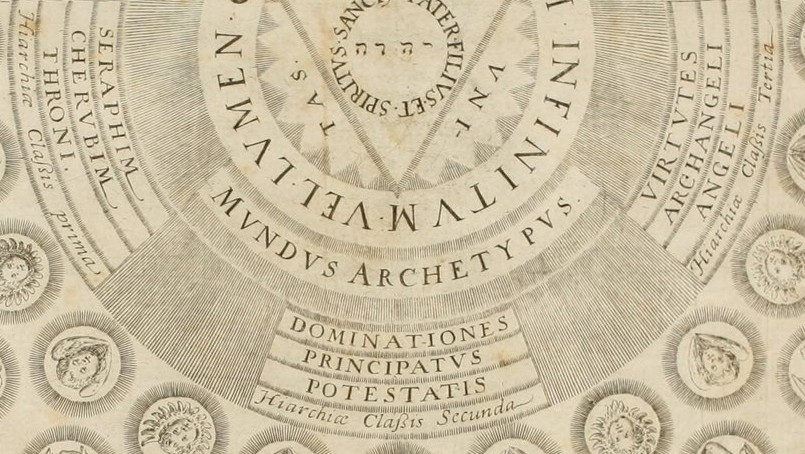
Nine ranks of angels, drawn as rings or as rungs. Note which order the picture puts at the top, and whether the book beside it agrees.
In plain words Three banners carry nine names between them. On the left, the Seraphim, the Cherubim and the Thrones, called the first class. Under the centre, the Dominations, the Principalities and the Powers, the second. On the right, the Virtues, the Archangels and the Angels, the third. Rank on rank of winged heads and small winged bodies spreads out below them, each in its own burst of rays.
The plate, 1678 “SERAPHIM. CHERVBIM. THRONI. Hiarchiae Classis prima.”
The plate, 1678 “DOMINATIONES. PRINCIPATVS. POTESTATIS. Hiarchiae Classis Secunda.”
The plate, 1678 “VIRTVTES. ARCHANGELI. ANGELI. Hiarchiae Classis Tertia.”
Symbolica, 2026 The engraver writes Hiarchiae for Hierarchiae on all three banners, and the archive keeps it. Where this plate puts the Principalities in the second class and the Virtues in the third, Kircher puts the Virtues sixth and the Principalities seventh. Two seventeenth-century plates, the same nine names, two orders.
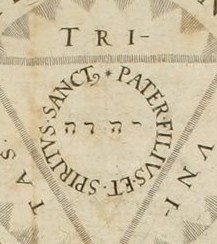
God shown, or pointed at. Look for what stands where a face would be: a name in a cloud, a circle above the top of a diagram, a ring of verses, a sign over a head.
In plain words The engraver cut one word into three and set it round the triangle: TRI at the top, VNI at the right, TAS at the foot. Inside the triangle a circle names the three persons, and inside that again stand the four Hebrew letters of the Name.
The plate, 1678 “TRI- -VNI- -TAS. SANCTVS PATER, FILIVS ET SPIRITVS SANCTVS.”
Symbolica, 2026 The plate's Latin, put into English here: Trinity. Holy Father, Son and Holy Spirit. The four Hebrew letters in the middle of the circle are the ones the archive prints as the Name.
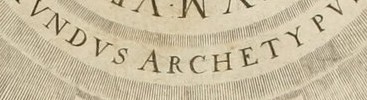
A diagram of everything, drawn so that a person can be found inside it. Note where the human figure stands in the scheme.
In plain words Two worlds are named and nothing between them is. The archetypal world arcs under the Trinity. The world of intelligences runs along the bottom of the sheet, under the last rank of heads. Everything the plate draws happens between those two lines.
The plate, 1678 “MVNDVS ARCHETYPVS. MVNDVS INTTELLIGENTIARVM.”
Symbolica, 2026 The plate's Latin, put into English here: The archetypal world. The world of intelligences.
Also carrying the Angel and the Wing
42 works carry it. The 6 where it is the central motif are here. The symbol.
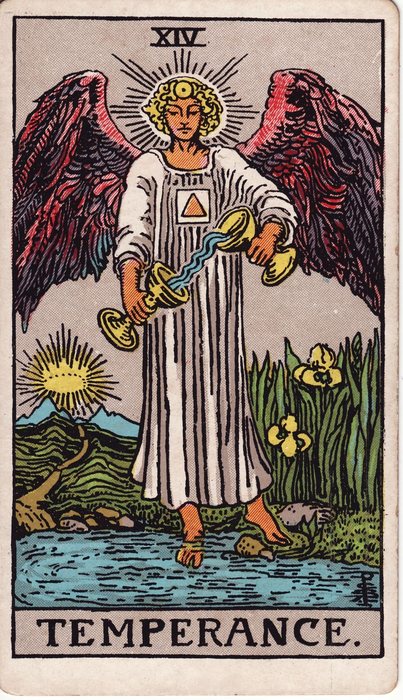
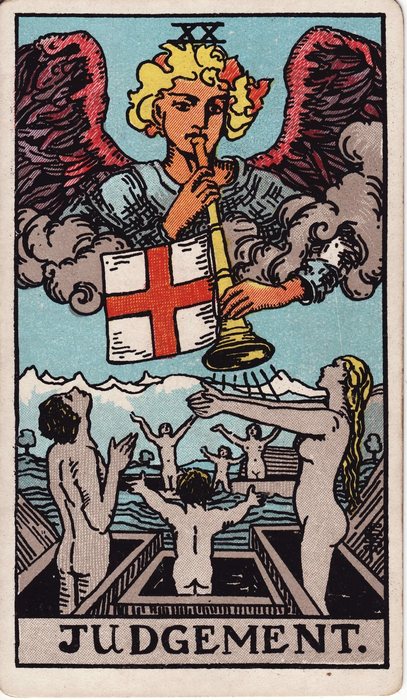
Where the detail is the subject
Each of these is in the picture without being what it is about. Below, one work that is about each.
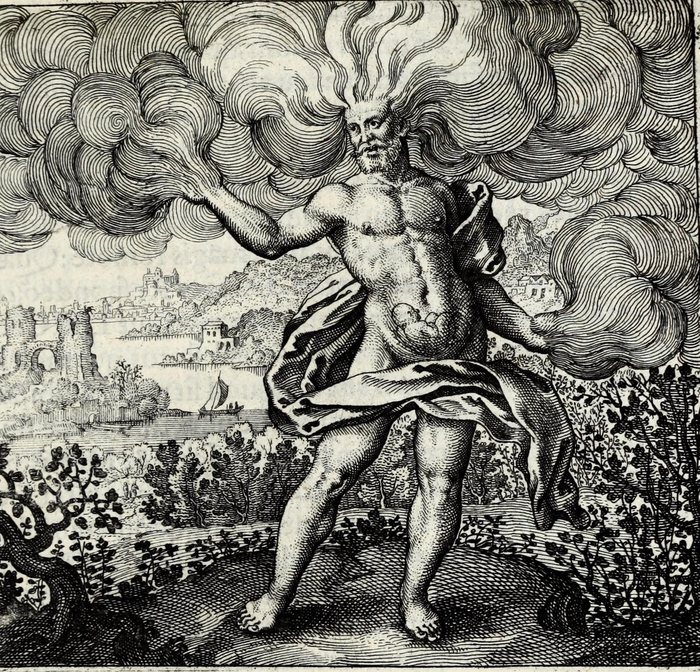
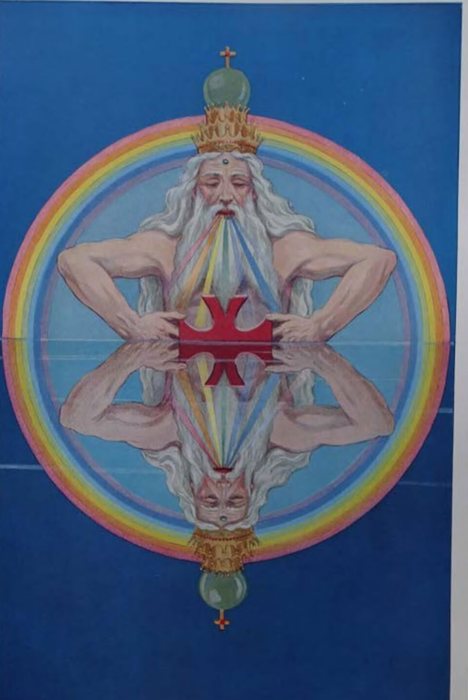
In the same series
Record
One symbol a week, decoded.
This picture is free at full size from its source, linked above. What an address gets is the Sunday letter: one picture, one symbol marked on it, what it meant and who said so, and the master files of the decoded plates as they are verified. Leave any time.
Free, one letter a week, unsubscribe in one click. How the address is used.
Scroll or pinch to zoom · drag to move · double-tap for 1:1 · 1400 by 987 pixel web copy; the source file is linked under Record