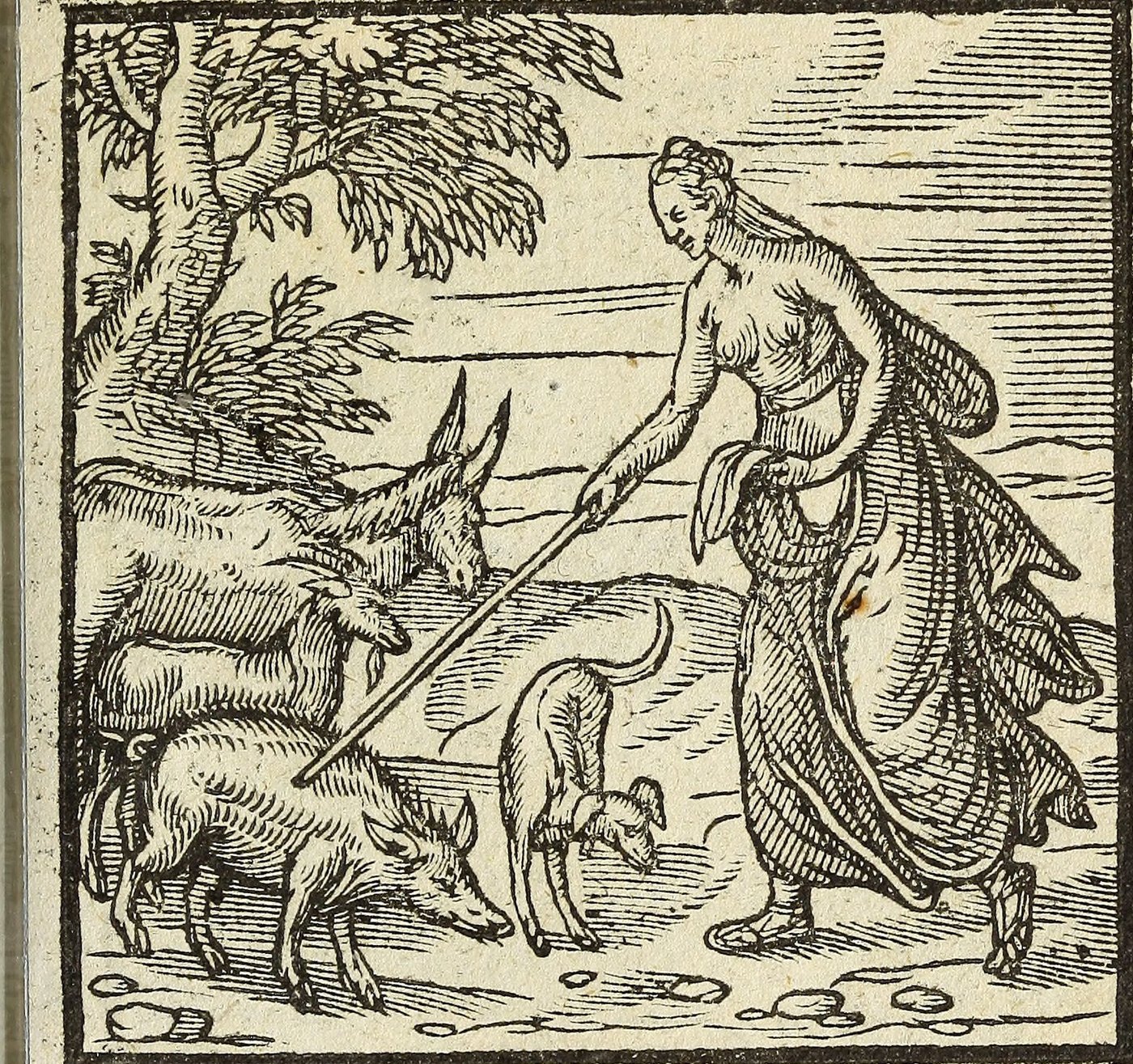
Cauendum à meretricibus
The Demon and the Monster as the central motif. From Alciato's Emblemata.
What is happening
Andrea Alciato, 1648 “Cauendum à meretricibus.”
Symbolica, 2026 Alciato's motto, put into English here: Beware of harlots.
Andrea Alciato, 1648 “Sole sata Circes tam magna potentia fertur,
Verterit ut multos in noua monstra viros.
Testis equûm domitor Picus, tum Scylla biformis,
Atque Ithaci postquam vina bibere sues.
Indicat illustri meretricem nomine Circe,
Et rationem animi perdere, quisquis amat.”
Symbolica, 2026 Alciato's epigram, put into English here: So great is the power reported of Circe, daughter of the Sun, that she turned many men into new monsters. Witness Picus the tamer of horses, then two-formed Scylla, and the Ithacan's men, swine after they had drunk the wine. Circe, by her famous name, points to the harlot, and shows that whoever loves loses the reason of his mind.
Key · 1 motif
Tap a motif on the picture, or a line below. Its note opens under the line, with the reading its author gave it.
- Primary motif
The picture
The men Circe has changed, standing as a stag, a goat and a boar: Alciato's own word for them is monstra. By eye
The reading
The picture read whole, in the archive's words, from the sources quoted on the marks. Read on, and the picture follows: the motif under discussion keeps its colour.
A woman in a long gown, her hair loose, leans forward at the right and holds out a long wand toward a group of animals under a tree. A stag with full antlers, a goat and a boar crowd together at the left; a smaller beast stands in the middle of the ground between them. There is water behind and a hatched sky above.
The motto is the reading: Cauendum à meretricibus, beware of harlots. Alciato does not present Circe as a witch or as a lover but as a warning about appetite, and he produces witnesses for it, Picus who was turned into a bird, two-formed Scylla, and the crew of the Ithacan after they drank. The last line is the moral the picture is carrying: Circe, by her famous name, points to the harlot, and whoever loves loses the reason of his mind. The animals are the argument, not the incident.
Decoded: every motif is marked, and each mark carries the reading its author gave it, quoted from the text, or says that it is observed on the picture and not read. The reading above is the archive's own, made from those sources and no others.
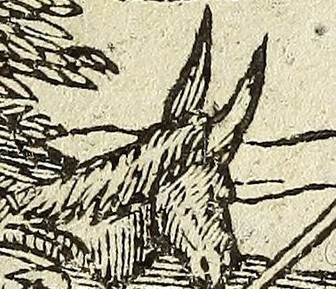
Almost always a composite and almost always subordinate. Note what it is made of and whether it is bound.
In plain words The animals are not Circe's beasts. They are her victims, and the epigram says so in its second line: she turned many men into new monsters. The herd under her wand is that line drawn. Alciato names three cases, Picus, Scylla and the crew, and the block gives a herd rather than the three. Only the boar is identified by the poem, in the fourth line, which also says when the crew became swine: after they had drunk the wine. The smaller beast in the middle is named nowhere, and is read here as one more of the many men.
Andrea Alciato, 1648 “Sole sata Circes tam magna potentia fertur, / Verterit ut multos in noua monstra viros.”
Symbolica Alciato's Latin, put into English here: So great is the power reported of Circe, daughter of the Sun, that she turned many men into new monsters.
Andrea Alciato, 1648 “Atque Ithaci postquam vina bibere sues.”
Symbolica Alciato's Latin, put into English here: and the Ithacan's men, swine after they had drunk the wine.
Symbolica The smaller beast is not named in the epigram. Symbolica reads it as one more of the many men of the second line, tagged by eye.
Also carrying the Demon and the Monster
23 works carry it. The 6 where it is the central motif are here. The symbol.
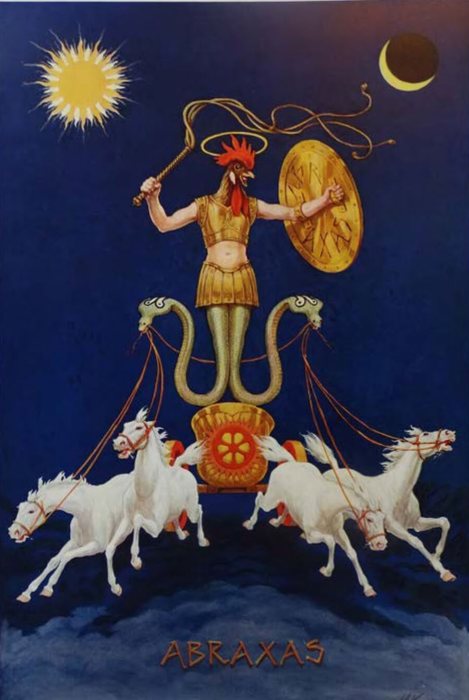 Abraxas, a Gnostic Pantheos
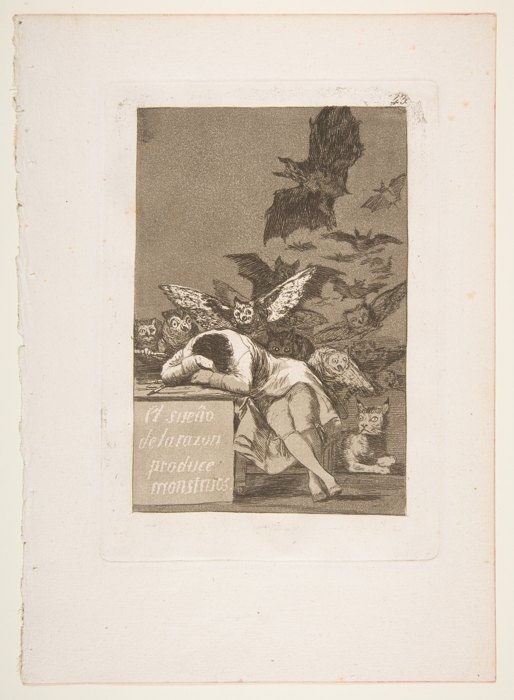 The Sleep of Reason Produces Monsters
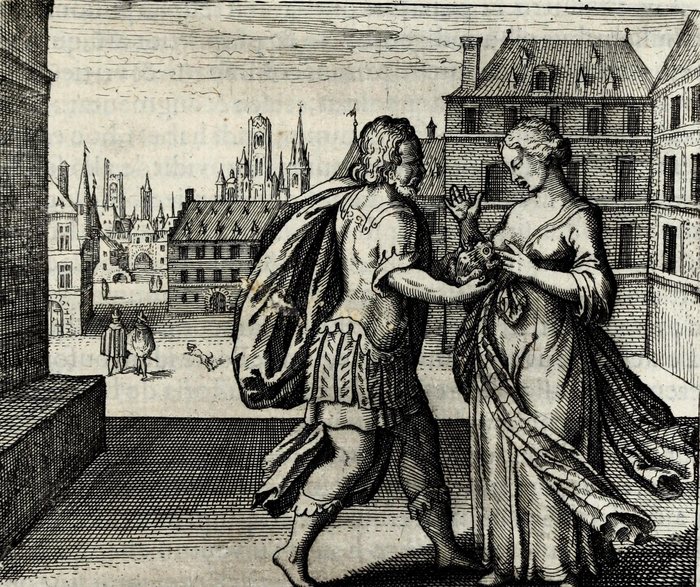 Appone mulieri super mammas bufonem, ut ablactet eum, & moriatur mulier, sitque bufo grossus de lacte
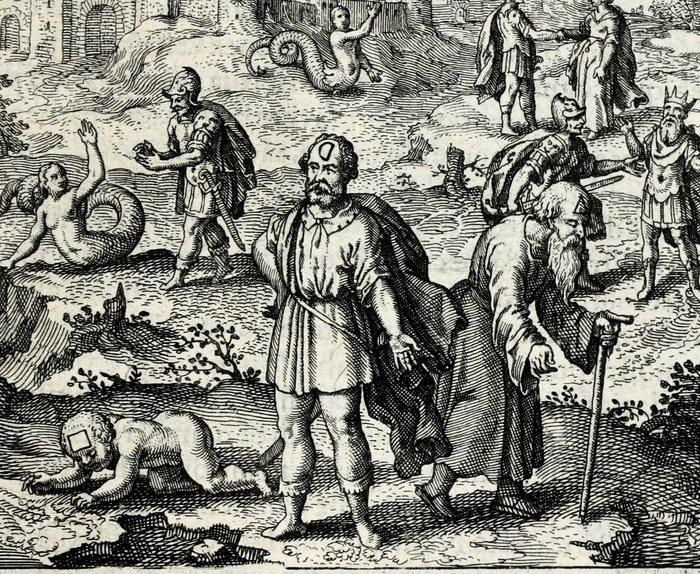 Oedypus Sphynge superata & trucidato Lajo patre matrem ducit in uxorem
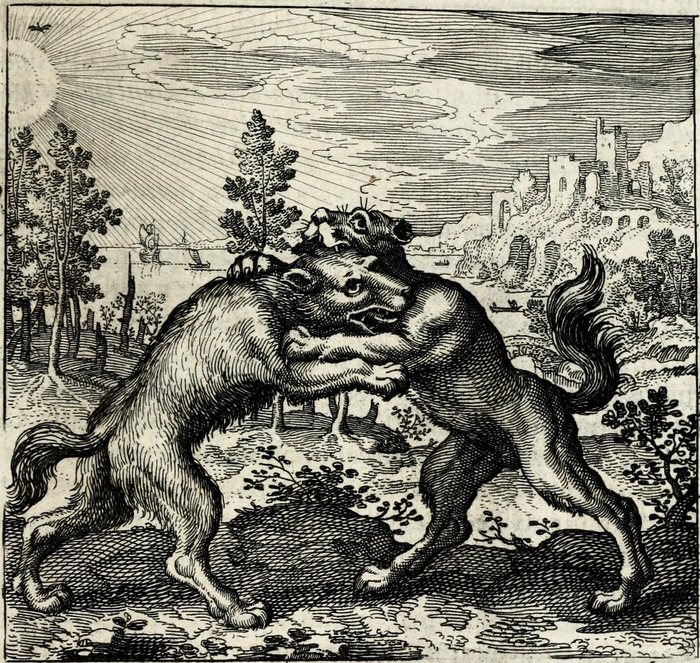 Lupus ab Oriente & Canis ab Occidente venientes se invicem momorderunt
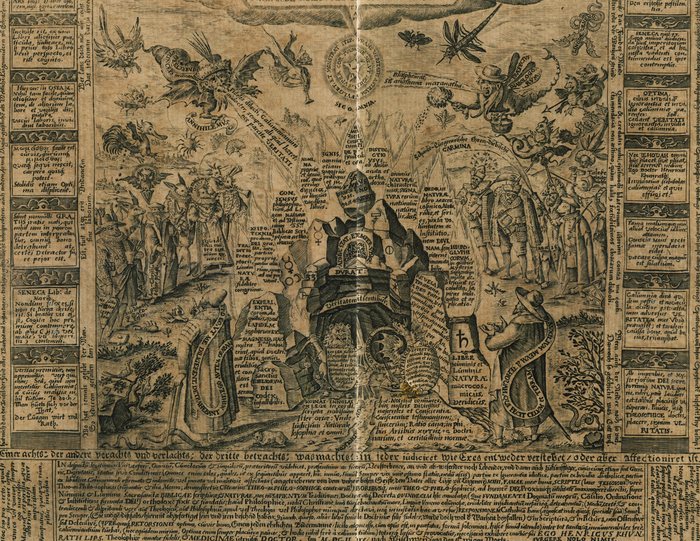 Against the slanderers, by right of retort
In the same series
Record
One symbol a week, decoded.
This picture is free at full size from its source, linked above. What an address gets is the Sunday letter: one picture, one symbol marked on it, what it meant and who said so, and the master files of the decoded plates as they are verified. Leave any time.
Free, one letter a week, unsubscribe in one click. How the address is used.
Scroll or pinch to zoom · drag to move · double-tap for 1:1 · 1400 by 1315 pixel web copy; the source file is linked under Record