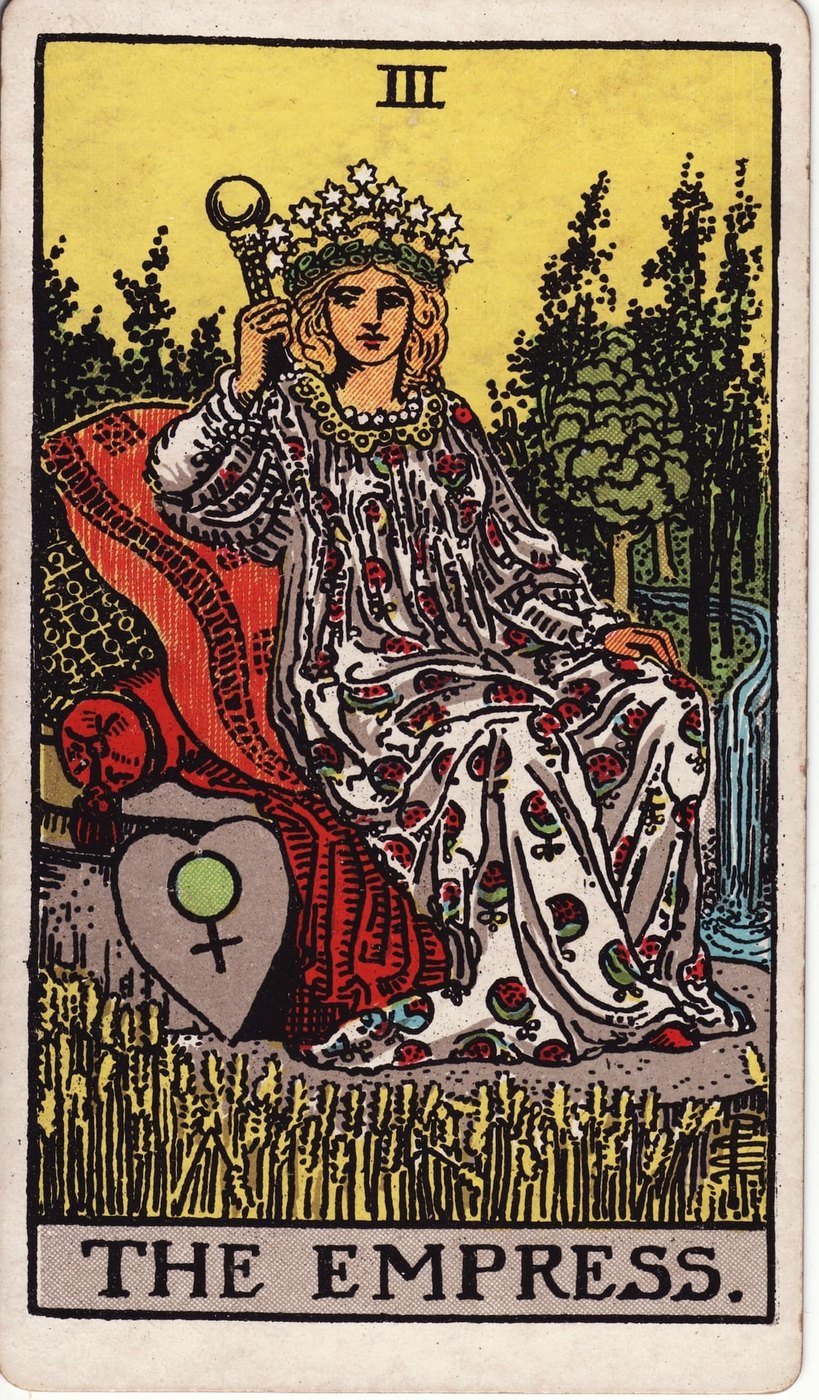
The Empress (III)
The Empress as the central motif, filed under the King and the Queen, with the Crown and the Water in a secondary part. From The 1909 tarot.
What is happening
Waite, 1911 “The symbol of Venus is on the shield which rests near her.”
Waite, 1911 “The sceptre which she bears is surmounted by the globe of this world.”
Key · 3 motifs
Tap a motif on the picture, or a line below. Its note opens under the line, with the reading its author gave it.
- Primary motif
- Secondary motifs · 2
The picture
A crowned woman seated on cushions in a flowered gown, a diadem of twelve stars, a sceptre topped with a globe, a heart-shaped shield with the sign of Venus at her feet, a field of ripe corn before her and a waterfall among trees behind; the Empress as the central motif. By eye
The reading
The picture read whole, in the archive's words, from the sources quoted on the marks. Read on, and the picture follows: the motif under discussion keeps its colour.
Waite calls her a stately figure ‘as of a daughter of heaven and earth’, then spends the rest of his paragraph deciding which. She is ‘the inferior Garden of Eden, the Earthly Paradise’, he writes. She is not Regina coeli, the queen of heaven. She is refugium peccatorum, the refuge of sinners, the fruitful mother of thousands. Earth, then, and earth kept as a garden.
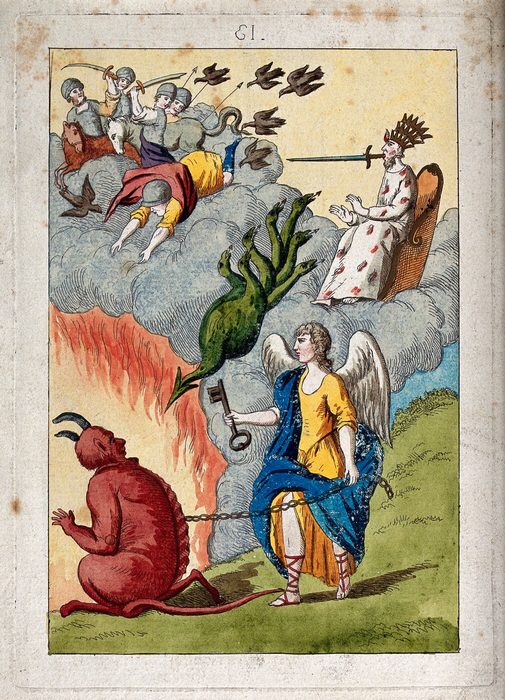
The one piece of heaven she is allowed is the crown. Twelve stars, and Waite counts the ‘woman clothed with the sun’ among the names correctly given her, which sends a reader to the twelfth chapter of the Apocalypse, where that woman wears exactly this crown. Two pictures of her hang elsewhere in this archive, one cut by Dürer and one painted on a Wellcome sheet. Pamela Colman Smith gave the Empress the crown and nothing else of hers. No moon under the feet. No dragon waiting.
Below the crown it is all ground. Cushions, a heart shaped shield with the sign of Venus on it, a field of corn ripening in front of her and a waterfall in the trees behind. Waite gives the corn and the water one sentence between them and no gloss, and none is wanted: this is fertile country with a woman for its face. Even the sceptre ends in the globe of this world.
What she is for he answers with a door. The Empress ‘signifies the door or gate by which an entrance is obtained into this life’. The way out again is not hers: that, he says, is ‘the secret known to the High Priestess’. The two cards are a pair, the way in and the way out, which is why one is filed with the crowned figures and the other between the pillars. Then he clears the older readings away. Not the Word. Not the Divine Nature. Not the Triad. ‘Universal fecundity and the outer sense of the Word’, and nothing beyond that.
Readings quoted
Waite, 1911 “In another order of ideas, the card of the Empress signifies the door or gate by which an entrance is obtained into this life, as into the Garden of Venus; and then the way which leads out therefrom, into that which is beyond, is the secret known to the High Priestess: it is communicated by her to the elect.”
Waite, 1911 “Most old attributions of this card are completely wrong on the symbolism--as, for example, its identification with the Word, Divine Nature, the Triad, and so forth.”
Decoded: every motif is marked, and each mark carries the reading its author gave it, quoted from the text, or says that it is observed on the picture and not read. The reading above is the archive's own, made from those sources and no others.
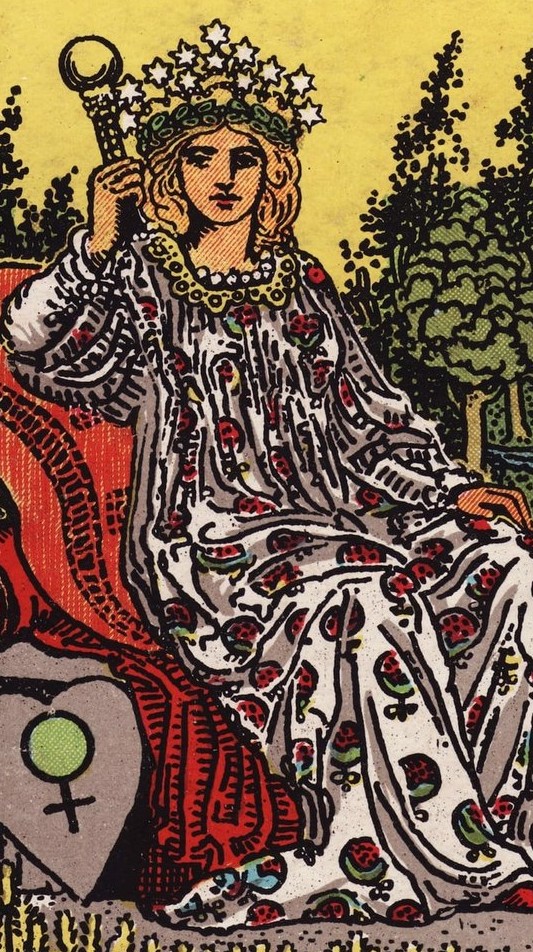
A rank rather than a person. Read the robe, the throne and what comes out of the mouth before you read the face.
In plain words A queen on a throne of cushions in the open air, with a grain field in front of her and woods and water behind. Waite reads her as the earth itself in its fruitful aspect: not the queen of heaven, he says, but the earthly paradise and the mother of thousands. She is filed with the King and the Queen because that is what the picture shows, a crowned woman enthroned; the card calls her the Empress.
Waite, 1911 “A stately figure, seated, having rich vestments and royal aspect, as of a daughter of heaven and earth.”
Waite, 1911 “She is the inferior Garden of Eden, the Earthly Paradise, all that is symbolized by the visible house of man. She is not Regina coeli, but she is still refugium peccatorum, the fruitful mother of thousands.”
Waite, 1911 “She is above all things universal fecundity and the outer sense of the Word.”
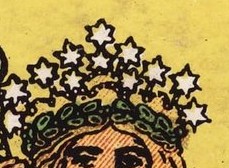
Completion, and in the Kabbalistic reading the first sephirah, the point at which the work is no longer yours.
In plain words Twelve stars in a ring make her crown. Waite lists ‘the woman clothed with the sun’ among the names that have correctly been given her: that woman, in the twelfth chapter of the Apocalypse, wears a crown of twelve stars, and two pictures of her hang elsewhere in this archive. The crown is the piece of that picture the Empress borrows.
Waite, 1911 “Her diadem is of twelve stars, gathered in a cluster.”
Waite, 1911 “There are also certain aspects in which she has been correctly described as desire and the wings thereof, as the woman clothed with the sun, as Gloria Mundi and the veil of the Sanctum Sanctorum; but she is not, I may add, the soul that has attained wings, unless all the symbolism is counted up another and unusual way.”
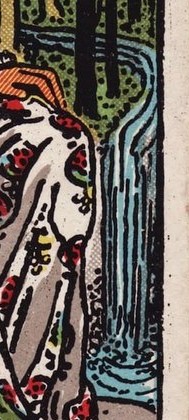
Where a thing is taken apart rather than destroyed. Note whether the figure is in the water, on it, or pouring it.
In plain words A stream drops through the trees at the right and runs toward the foreground. Waite names it and the ripening corn in one sentence and leaves both to speak for themselves, as the two things a fruitful land needs.
Waite, 1911 “A field of corn is ripening in front of her, and beyond there is a fall of water.”
Also carrying the King and the Queen
35 works carry it. The 6 where it is the central motif are here. The symbol.
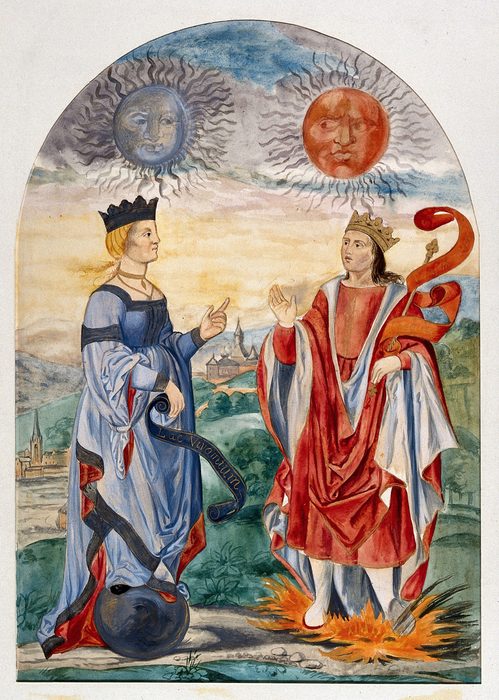
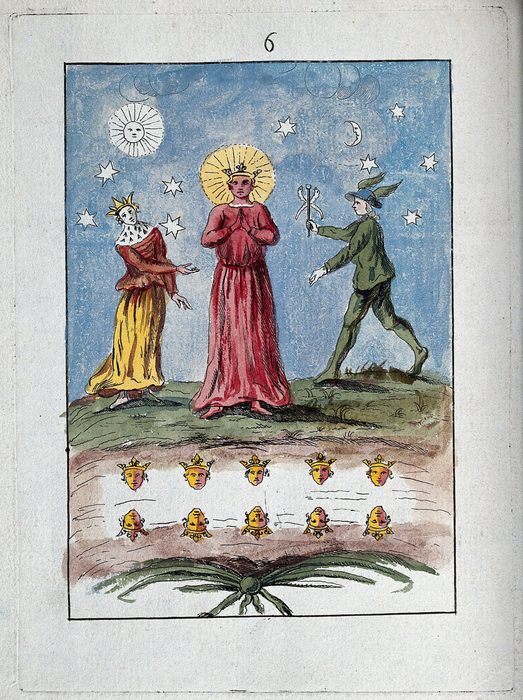
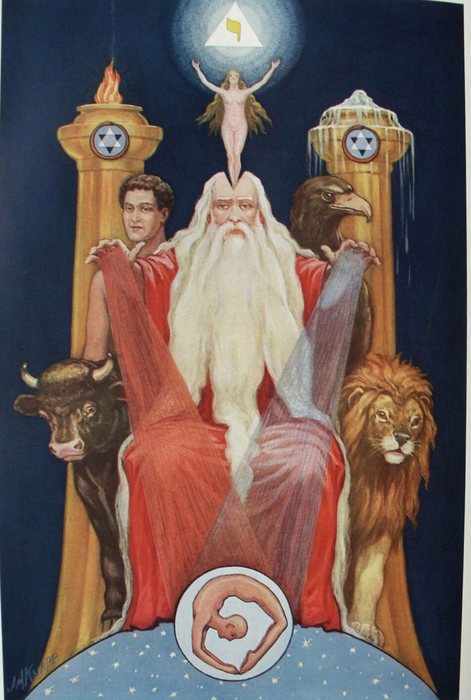
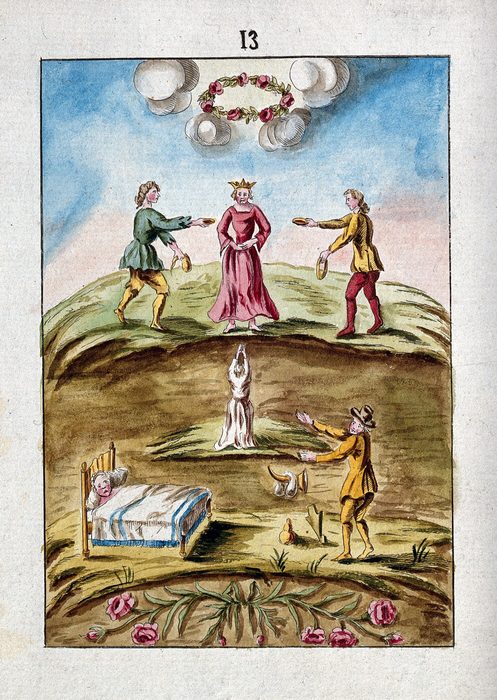
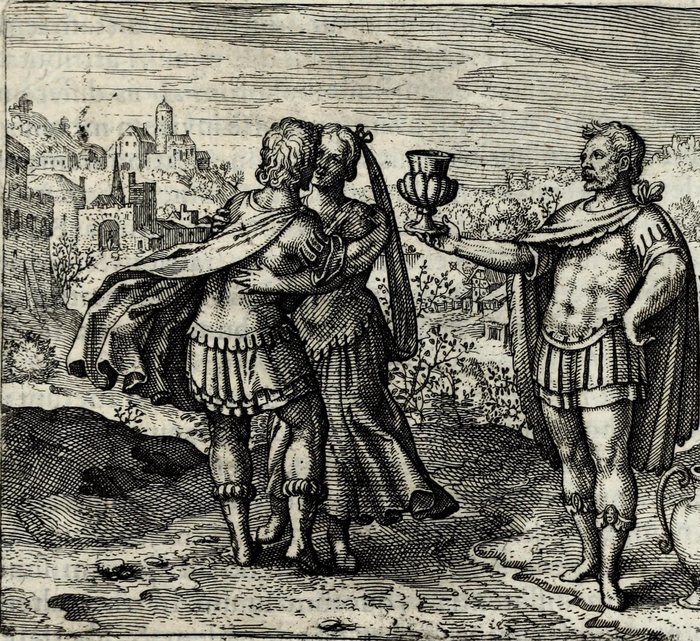
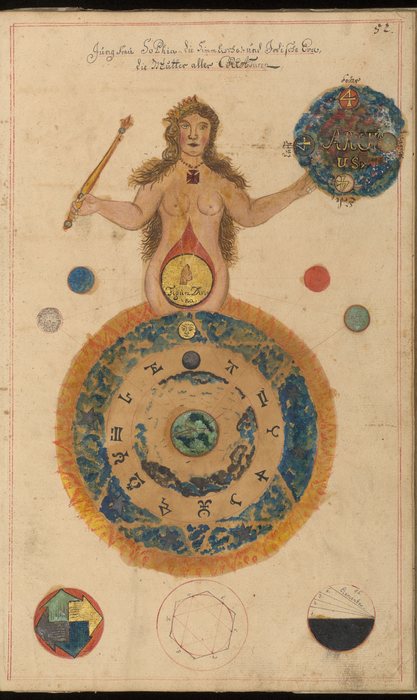
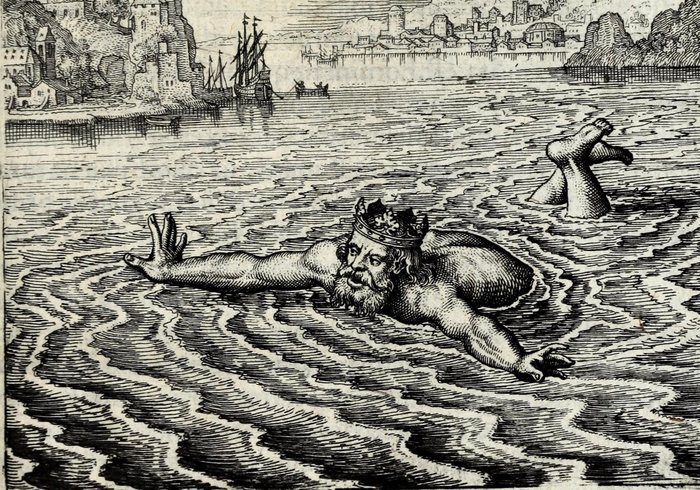
Where the detail is the subject
Each of these is in the picture without being what it is about. Below, one work that is about each.
In the same series
Record
One symbol a week, decoded.
This picture is free at full size from its source, linked above. What an address gets is the Sunday letter: one picture, one symbol marked on it, what it meant and who said so, and the master files of the decoded plates as they are verified. Leave any time.
Free, one letter a week, unsubscribe in one click. How the address is used.
Scroll or pinch to zoom · drag to move · double-tap for 1:1 · 819 by 1400 pixel web copy; the source file is linked under Record