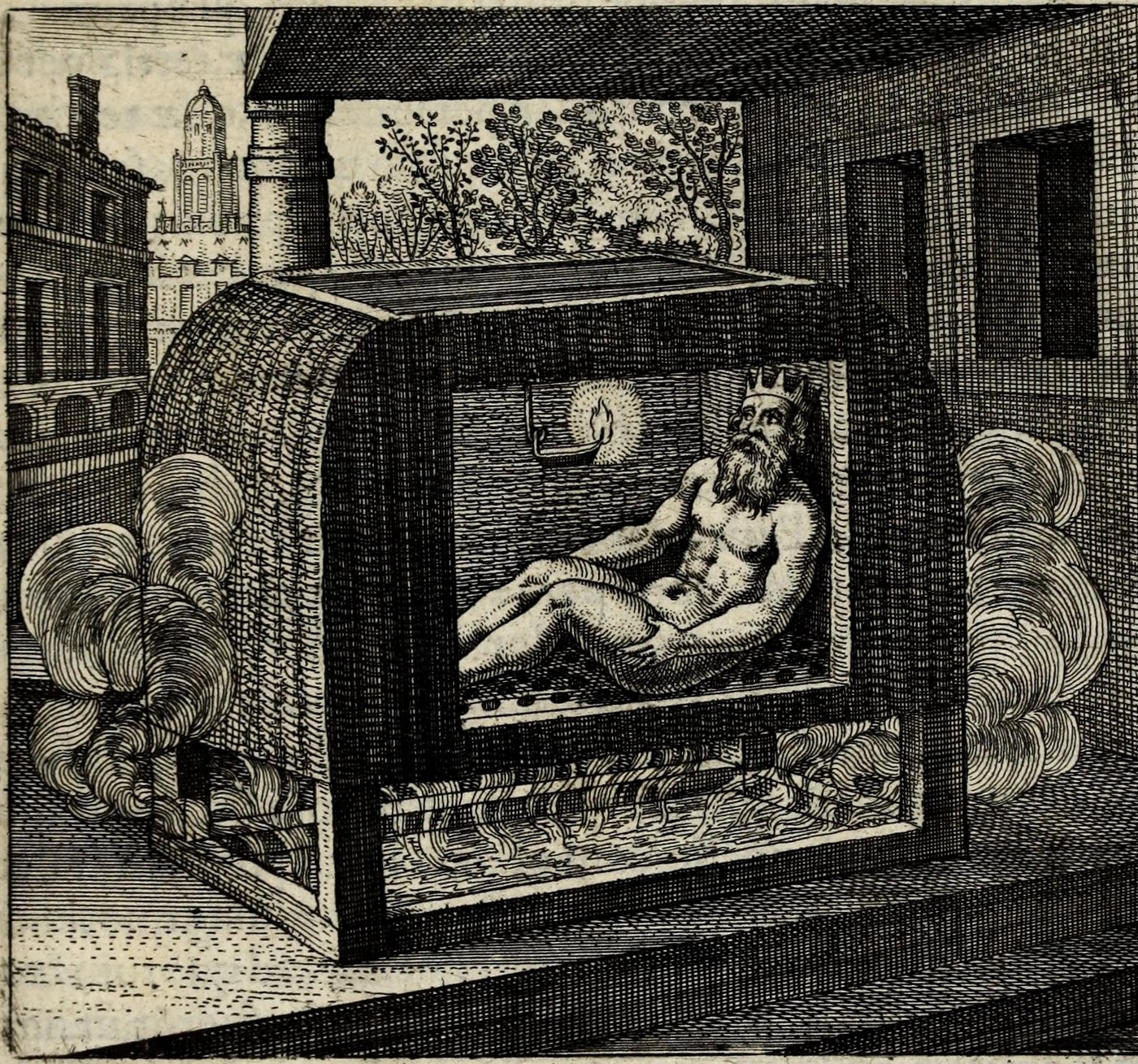
Rex balneatur in Laconico sedens, Atrâque bile liberatur à Pharut
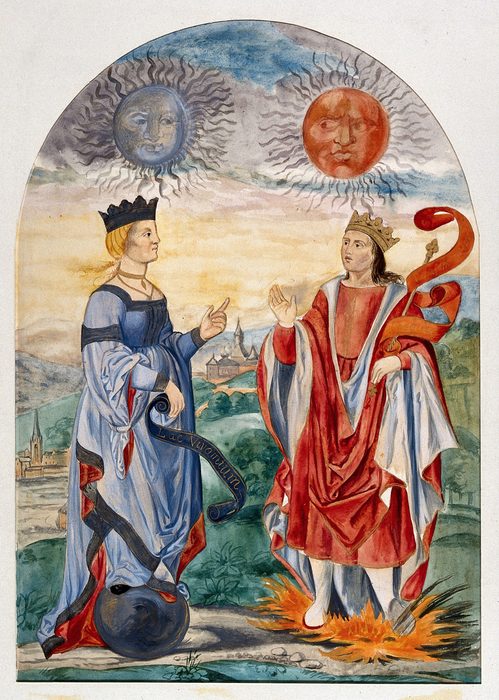
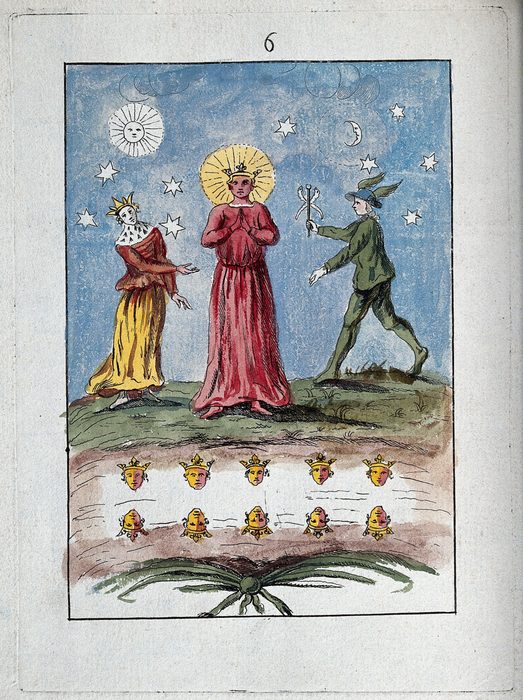
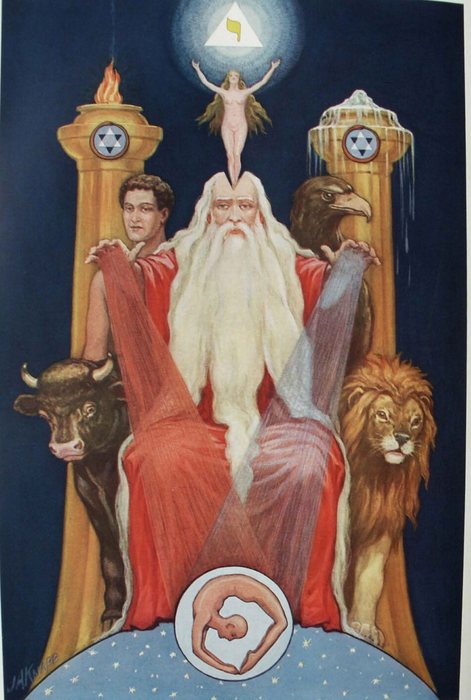
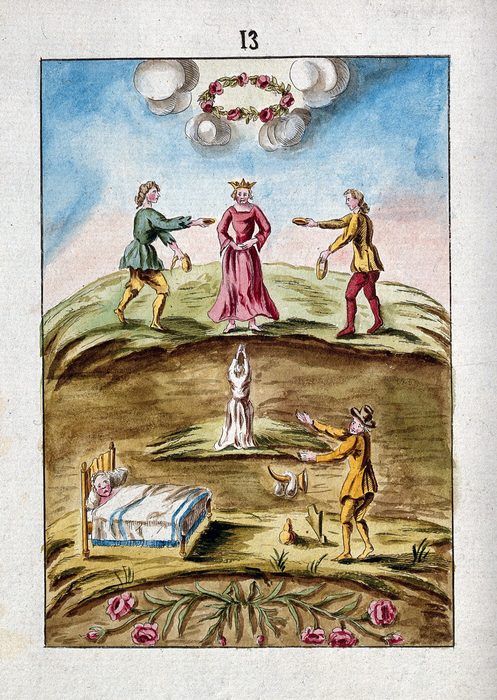
The King and the Queen as the central motif, with Fire and the Water in a secondary part. From Atalanta Fugiens.
What is happening
Michael Maier, 1618 “Rex balneatur in Laconico sedens, Atrâque bile liberatur à Pharut.”
Symbolica, 2026 Maier’s Latin, put into English here: The king bathes seated in the sweating room and is freed of black bile.
Michael Maier, 1618 “Rex Duenech (viridis cui fulgent arma Leonis)
Bile tumens rigidis moribus usus erat.
Hinc Pharut ad sese medicum vocat, ille salutem
Spondet, & aerias fonte ministrat aquas:
His lavat & relavat, vitreo sub fornice, donec
Rore madenti omnis bilis abacta fuit.”
Symbolica, 2026 Maier’s epigram, put into English here: King Duenech, whose arms shine with the green Lion, swollen with bile, was of a harsh temper. So he calls the physician Pharut to him, who promises health and brings airy waters from a spring. With these he washes and washes again, under a vault of glass, until with the wetting dew all the bile was driven off.
Key · 3 motifs
Tap a motif on the picture, or a line below. Its note opens under the line, with the reading its author gave it.
- Primary motif
- Secondary motifs · 2
The picture
The crowned figure inside the sweating box, the fire under it. By eye
The reading
The picture read whole, in the archive's words, from the sources quoted on the marks. Read on, and the picture follows: the motif under discussion keeps its colour.
‘Rex balneatur in Laconico sedens, Atrâque bile liberatur à Pharut’: the king bathes seated in the sweating room and is freed of black bile by Pharut. A crowned man sits in a closed wooden bath with a fire under it and steam rolling out on both sides.
‘Rex Duenech (viridis cui fulgent arma Leonis) / Bile tumens rigidis moribus usus erat’, King Duenech, whose arms shine with the green lion, swollen with bile, was of a harsh temper. The green lion on his arms ties him to the thirty-seventh emblem, where the lion is the copper of Hermes; this king is a metal with a temper.
‘Hinc Pharut ad sese medicum vocat’, so he calls the physician Pharut to him, ‘ille salutem / Spondet, & aerias fonte ministrat aquas’, who promises health and brings airy waters from a spring. The fire under the bath is what makes the waters airy.
‘His lavat & relavat, vitreo sub fornice’, with these he washes and washes again, under a vault of glass, ‘donec / Rore madenti omnis bilis abacta fuit’, until with the wetting dew all the bile was driven off. The steam is the water; the vault of glass is the sealed vessel; and the king is the matter, sweated clean of its blackness. Maier gives the physician a name, Pharut, and the archive holds no source that explains it.
Decoded: every motif is marked, and each mark carries the reading its author gave it, quoted from the text, or says that it is observed on the picture and not read. The reading above is the archive's own, made from those sources and no others.
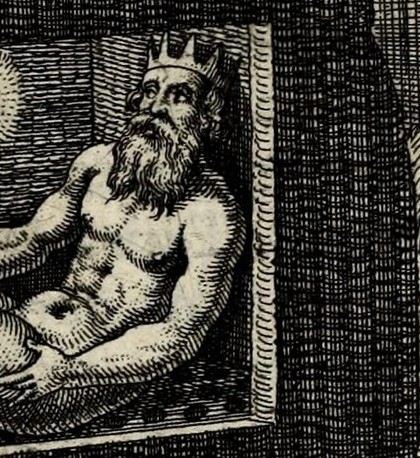
A rank rather than a person. Read the robe, the throne and what comes out of the mouth before you read the face.
In plain words A crowned king sits inside a closed bath with his head out, sweating. Maier names him Duenech and gives him the green lion for his arms; he is swollen with bile and harsh-tempered, and the bath is his cure.
Michael Maier, 1618 “Rex Duenech (viridis cui fulgent arma Leonis) / Bile tumens rigidis moribus usus erat.”
Symbolica Maier's Latin, put into English here: King Duenech, whose arms shine with the green Lion, swollen with bile, was of a harsh temper.
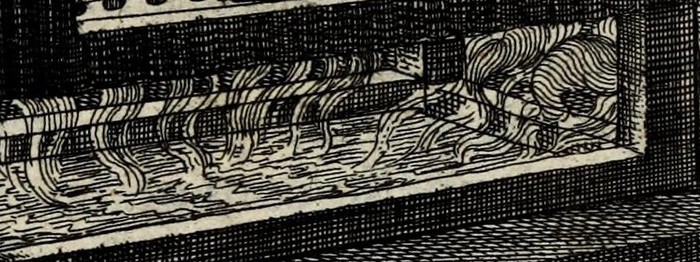
A count, a catastrophe, or the visible part of something that has no body. Note whether the flames are arranged in a number, breaking something, or standing where a figure would be.
In plain words The fire under the bath makes the steam. The physician Pharut promised the king health and brought him airy waters from a spring; the fire turns the water to air, and the king sits in it.
Michael Maier, 1618 “Hinc Pharut ad sese medicum vocat, ille salutem / Spondet, & aerias fonte ministrat aquas:”
Symbolica Maier's Latin, put into English here: So he calls the physician Pharut to him, who promises health and brings airy waters from a spring.
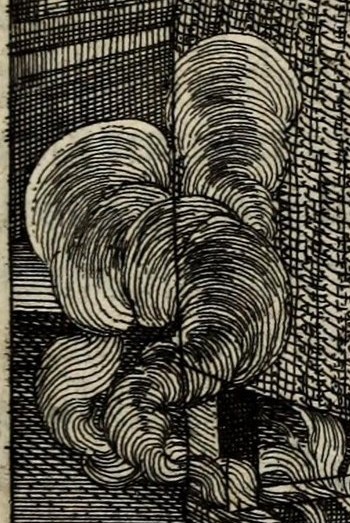
Where a thing is taken apart rather than destroyed. Note whether the figure is in the water, on it, or pouring it.
In plain words Clouds of steam roll out of the bath. The king is washed and washed again under a vault of glass until the wetting dew has driven off all his bile. Water as vapour, doing the work of a bath.
Michael Maier, 1618 “His lavat & relavat, vitreo sub fornice, donec / Rore madenti omnis bilis abacta fuit.”
Symbolica Maier's Latin, put into English here: With these he washes and washes again, under a vault of glass, until with the wetting dew all the bile was driven off.
Also carrying the King and the Queen
35 works carry it. The 6 where it is the central motif are here. The symbol.
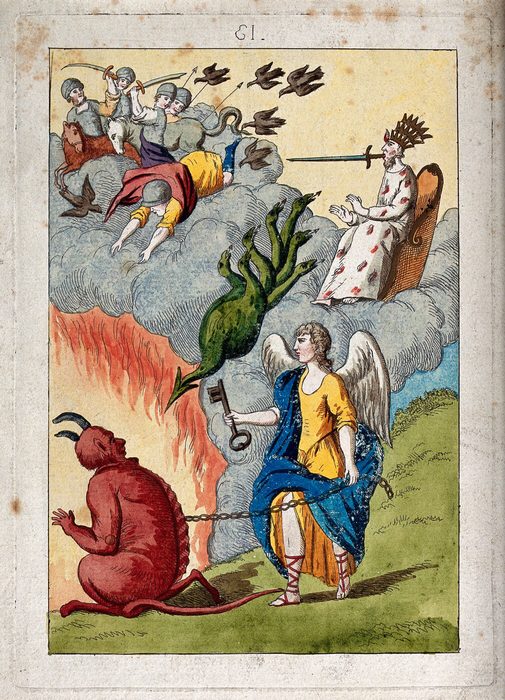
Where the detail is the subject
Each of these is in the picture without being what it is about. Below, one work that is about each.
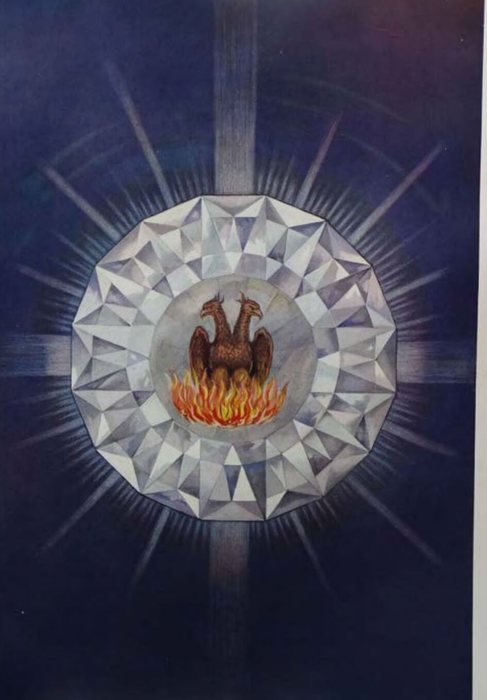
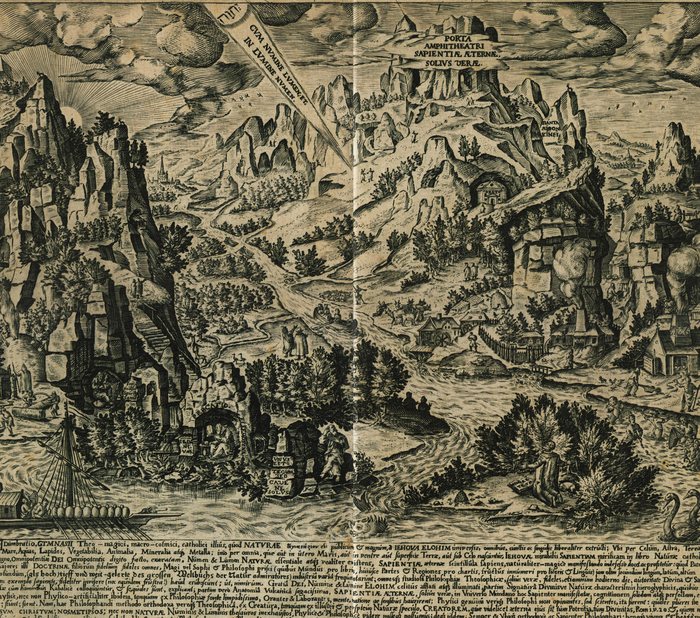
In the same series
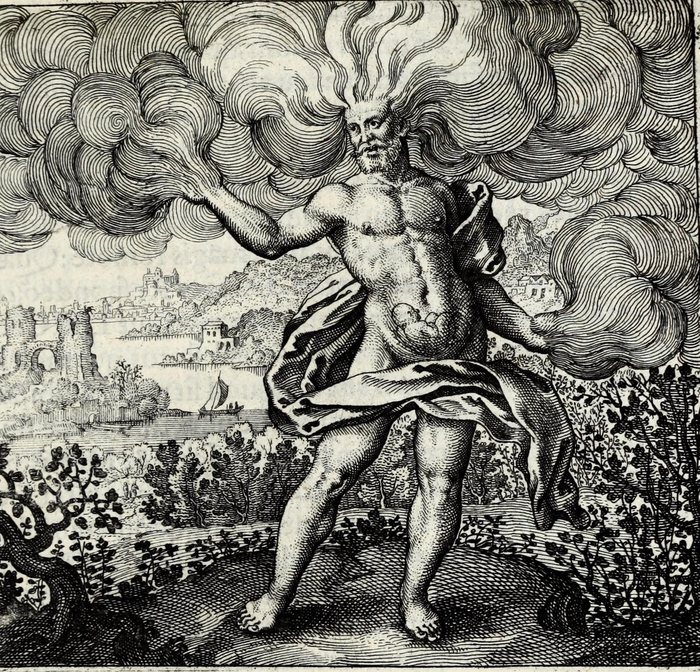 Portavit eum ventus in ventre suo
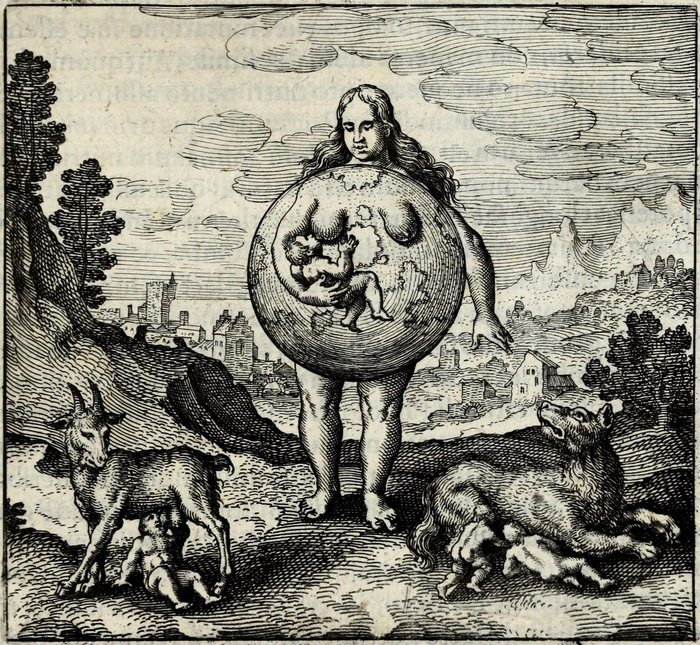 Nutrix ejus terra est
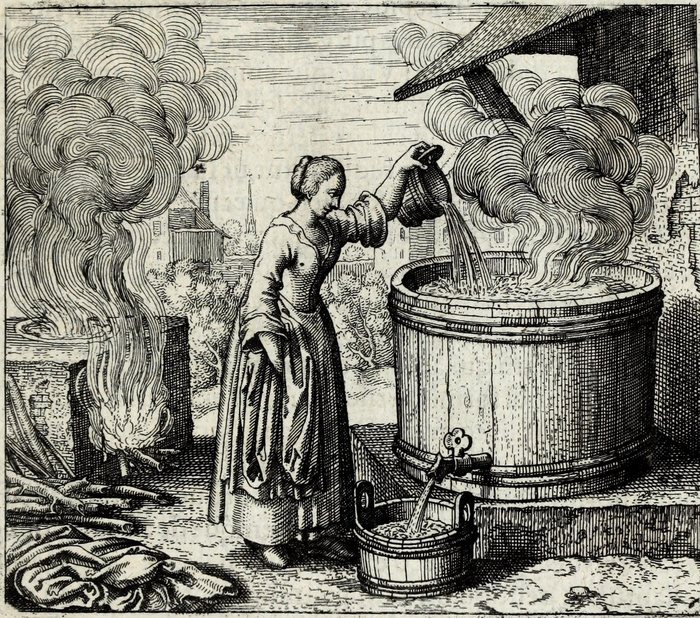 Vade ad mulierem lavantem pannos, tu fac similiter
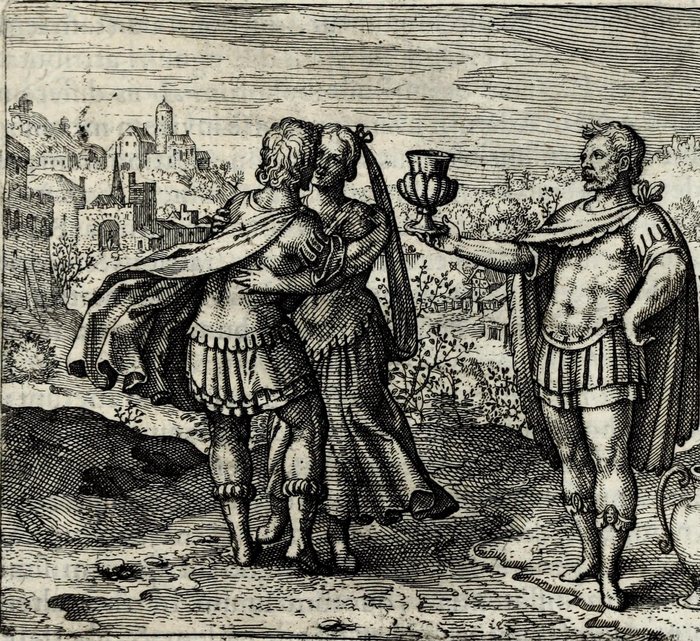 Conjunge fratrem cum sorore & propina illis poculum amoris
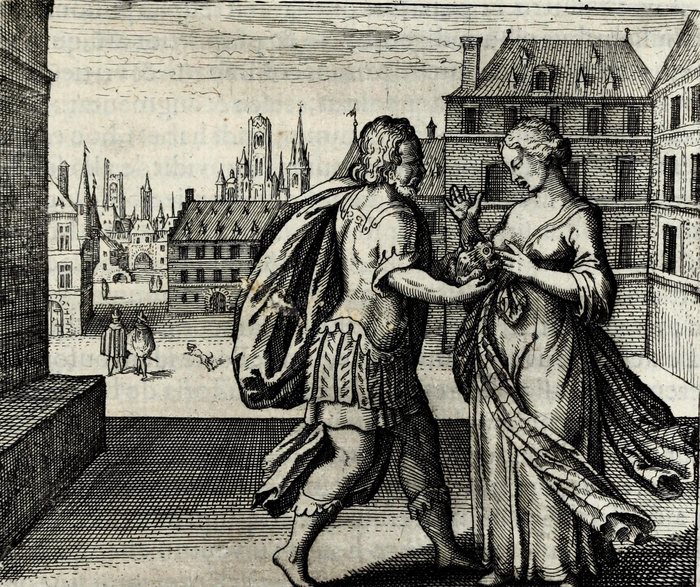 Appone mulieri super mammas bufonem, ut ablactet eum, & moriatur mulier, sitque bufo grossus de lacte
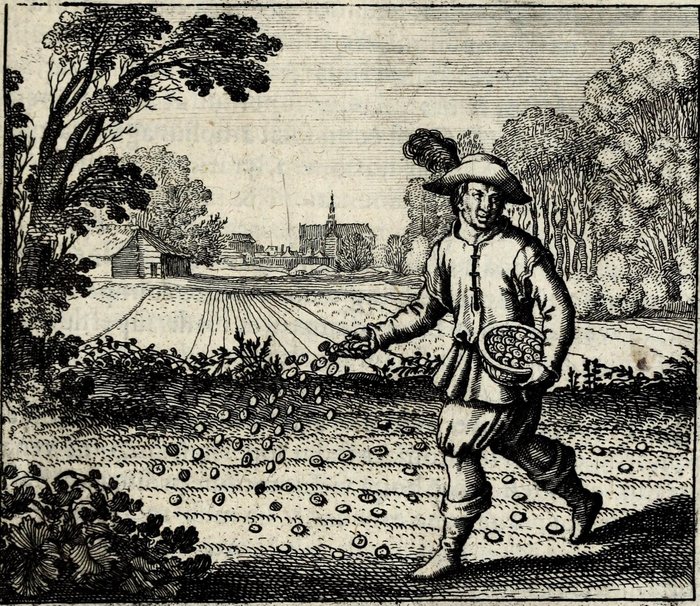 Seminate aurum vestrum in terram albam foliatam
Record
One symbol a week, decoded.
This picture is free at full size from its source, linked above. What an address gets is the Sunday letter: one picture, one symbol marked on it, what it meant and who said so, and the master files of the decoded plates as they are verified. Leave any time.
Free, one letter a week, unsubscribe in one click. How the address is used.
Scroll or pinch to zoom · drag to move · double-tap for 1:1 · 1400 by 1309 pixel web copy; the source file is linked under Record