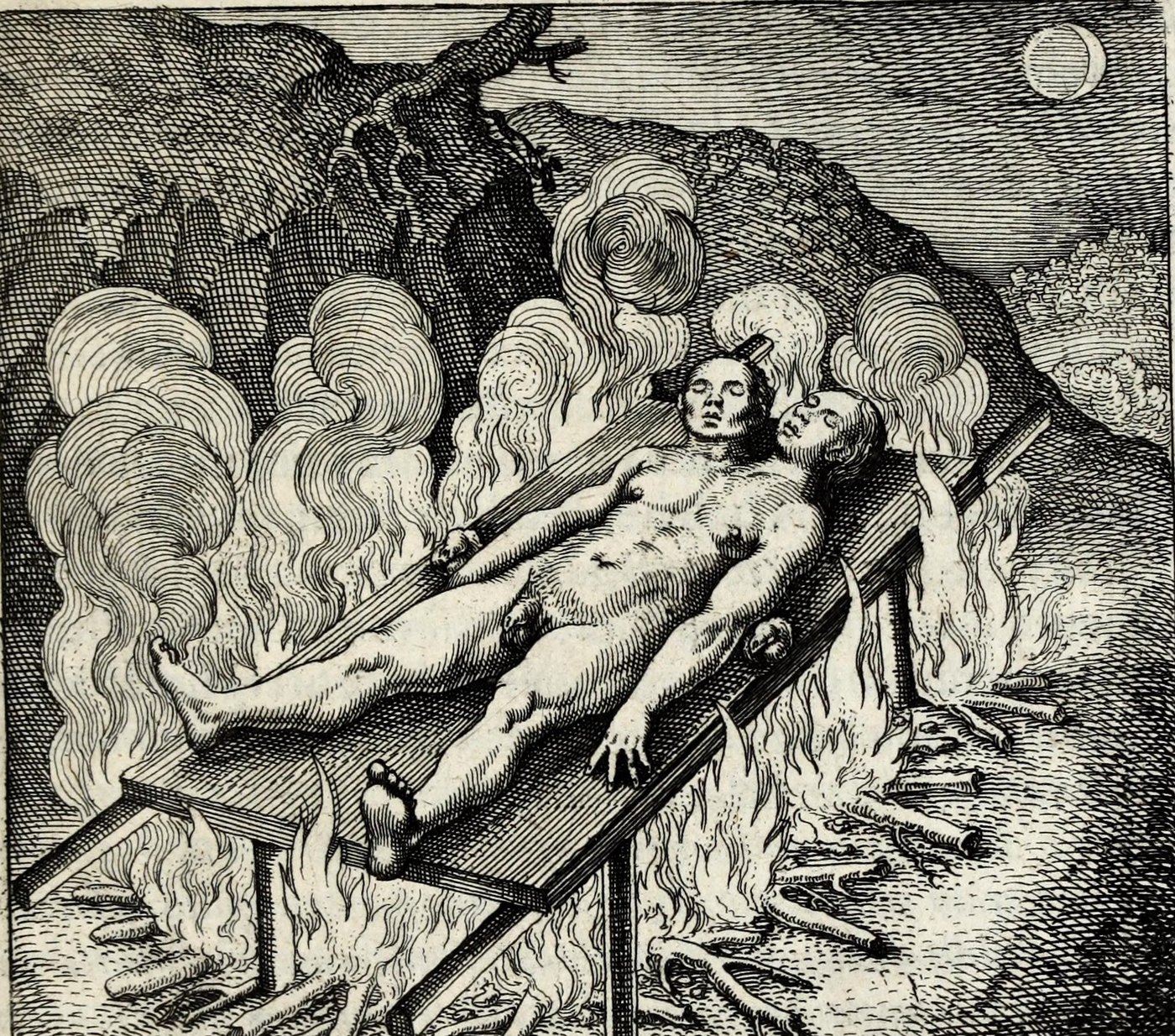
Hermaphroditus mortuo similis, in tenebris jacens, igne indiget
Fire as the central motif, with the King and the Queen in a secondary part. From Atalanta Fugiens.
What is happening
Michael Maier, 1618 “Hermaphroditus mortuo similis, in tenebris jacens, igne indiget.”
Symbolica, 2026 Maier’s Latin, put into English here: The hermaphrodite, like a dead man, lying in darkness, wants fire.
Michael Maier, 1618 “Ille biceps gemini sexus, en funeris instar
Apparet, postquam est humiditatis inops:
Nocte tenebrosa si conditur, indiget igne,
Hunc illi praestes, & modo vita redit.
Omnis in igne latet lapidis vis, omnis in auro
Sulfuris, argento Mercurii vigor est.”
Symbolica, 2026 Maier’s epigram, put into English here: That two-headed thing of double sex, see, looks like a corpse once it is drained of moisture. If it is buried in the dark of night it needs fire. Give it that, and life comes straight back. All the power of the stone lies hidden in fire, all the power of sulphur in gold, and the strength of Mercury is in silver.
Key · 2 motifs
Tap a motif on the picture, or a line below. Its note opens under the line, with the reading its author gave it.
- Primary motif
- Secondary motifs · 1
The picture
The two-headed body laid out on a bier over the fire. By eye
The reading
The picture read whole, in the archive's words, from the sources quoted on the marks. Read on, and the picture follows: the motif under discussion keeps its colour.
‘Hermaphroditus mortuo similis, in tenebris jacens, igne indiget’: the hermaphrodite, like a dead man, lying in darkness, wants fire. A body with two heads lies on a board over a fire, under a night sky with the moon in it.
‘Ille biceps gemini sexus, en funeris instar / Apparet’, that two-headed thing of double sex, see, looks like a corpse, ‘postquam est humiditatis inops’, once it is drained of moisture. The two heads are the king and the queen of the earlier emblems, joined now into one body, and the joining has left it dry and apparently dead.
‘Nocte tenebrosa si conditur, indiget igne’, if it is buried in the dark of night it needs fire; ‘Hunc illi praestes, & modo vita redit’, give it that, and life comes straight back. The fire round the bier is the cure. Then the summary, which reads like a creed: ‘Omnis in igne latet lapidis vis, omnis in auro / Sulfuris, argento Mercurii vigor est’, all the power of the stone lies hidden in fire, all the power of sulphur in gold, and the strength of mercury is in silver.
The hermaphrodite has an entry of its own in this archive, and this is one of two emblems in the book that draw it: here dead and waiting, in the thirty-eighth newly born on its two mountains.
Decoded: every motif is marked, and each mark carries the reading its author gave it, quoted from the text, or says that it is observed on the picture and not read. The reading above is the archive's own, made from those sources and no others.
A count, a catastrophe, or the visible part of something that has no body. Note whether the flames are arranged in a number, breaking something, or standing where a figure would be.
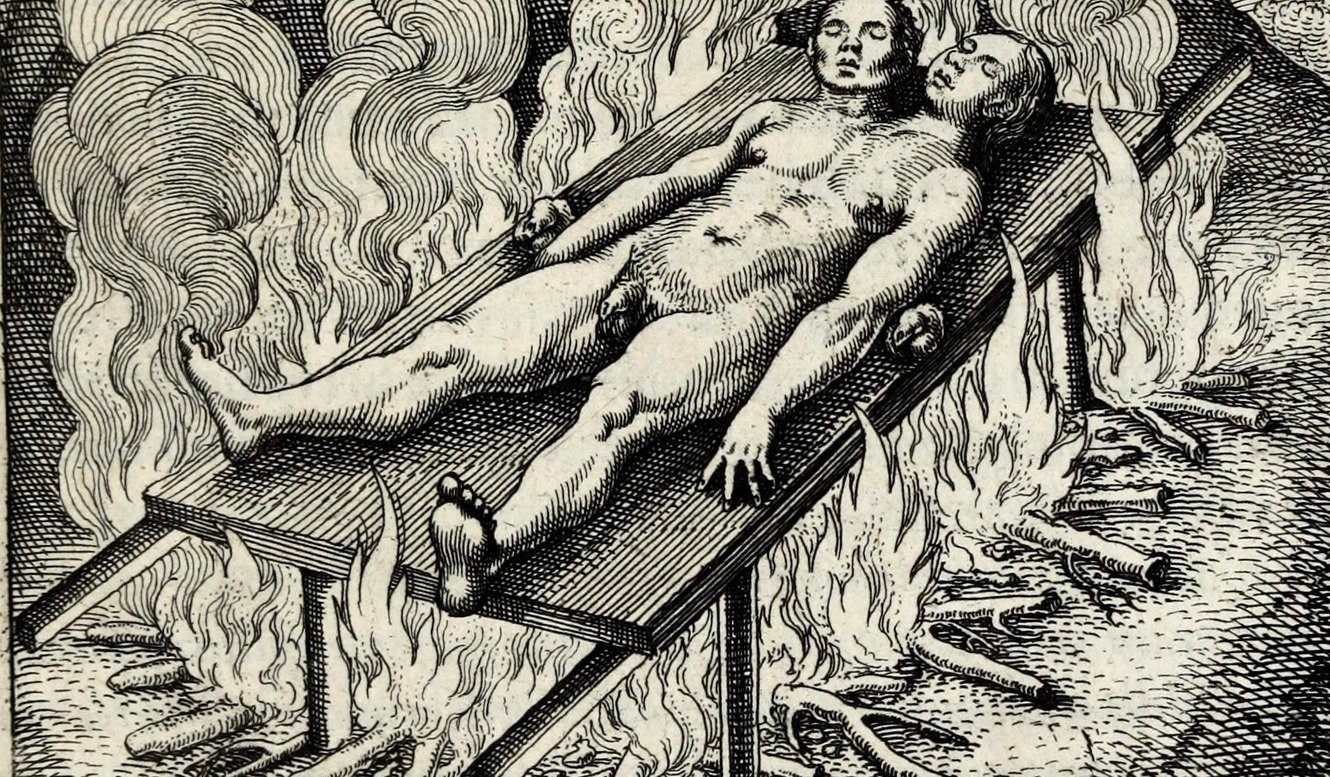
In plain words Fire burns all round a body laid out on a board. The body looks dead because it has dried out, and Maier's remedy is heat: give it fire and life comes straight back. The flames are not a cremation but a revival.
Michael Maier, 1618 “Nocte tenebrosa si conditur, indiget igne, / Hunc illi praestes, & modo vita redit.”
Symbolica Maier's Latin, put into English here: If it is buried in the dark of night it needs fire. Give it that, and life comes straight back.
The conjunction completed. One body, two heads, and the end of the argument between sun and moon.
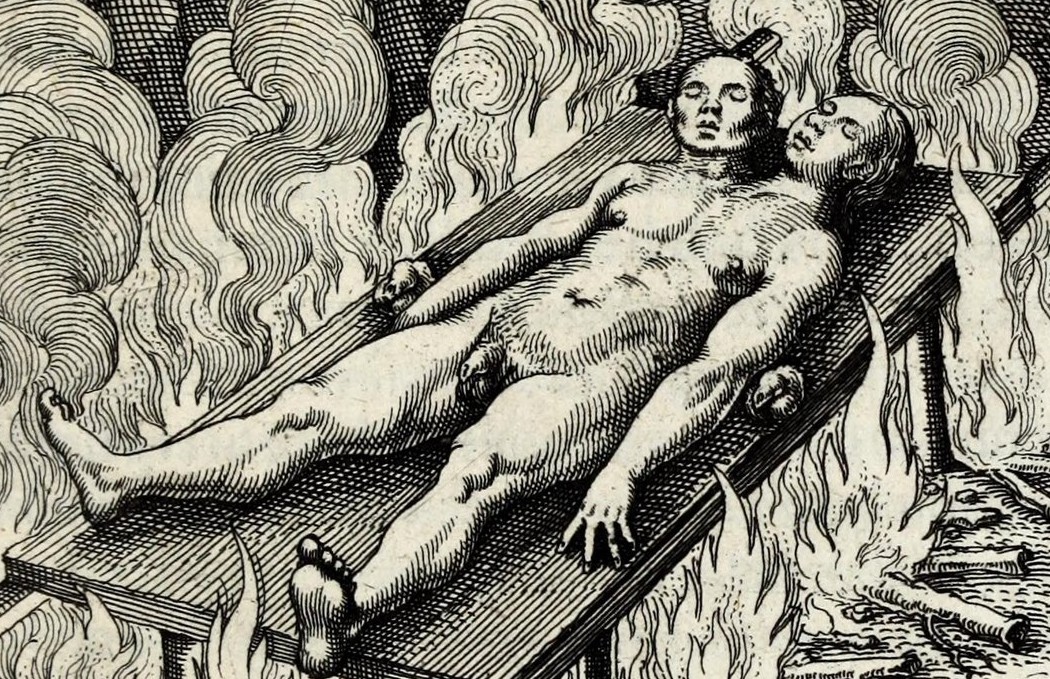
In plain words The body on the bier has two heads, a man's and a woman's, on one trunk. It is the hermaphrodite, the king and queen joined into one thing, and it looks dead because its moisture is gone. Maier's last couplet says where its life is kept: all the power of the stone lies hidden in fire.
Michael Maier, 1618 “Ille biceps gemini sexus, en funeris instar / Apparet, postquam est humiditatis inops:”
Symbolica Maier's Latin, put into English here: That two-headed thing of double sex, see, looks like a corpse once it is drained of moisture.
Also carrying Fire
44 works carry it. The 6 where it is the central motif are here. The symbol.
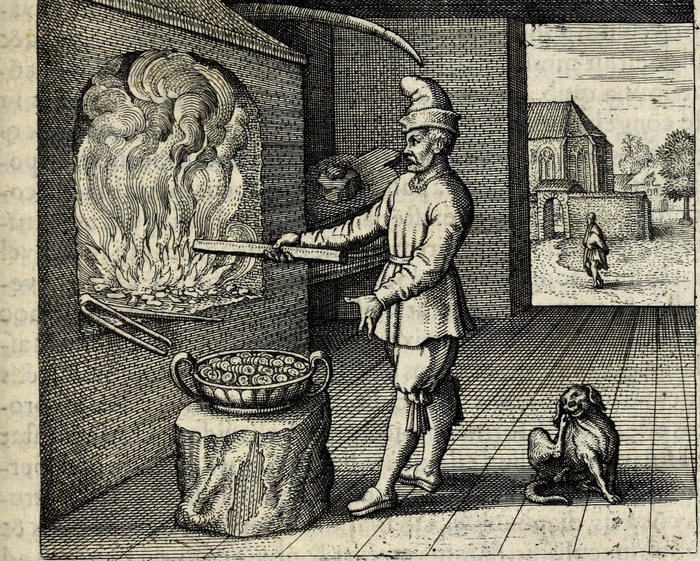
Where the detail is the subject
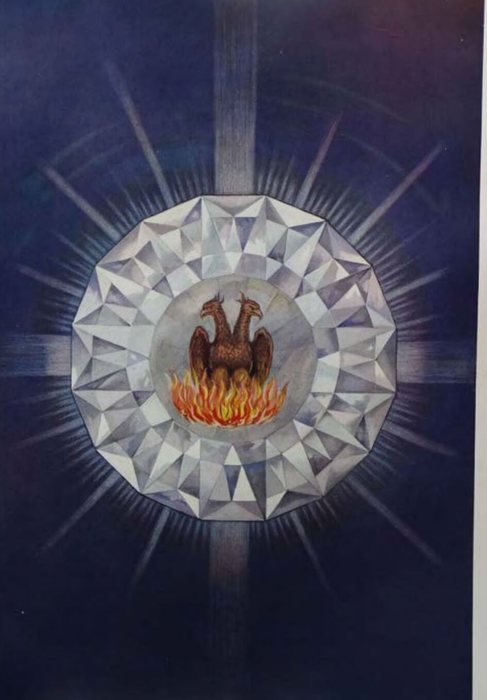
This is in the picture without being what it is about. Below, one work that is about it.
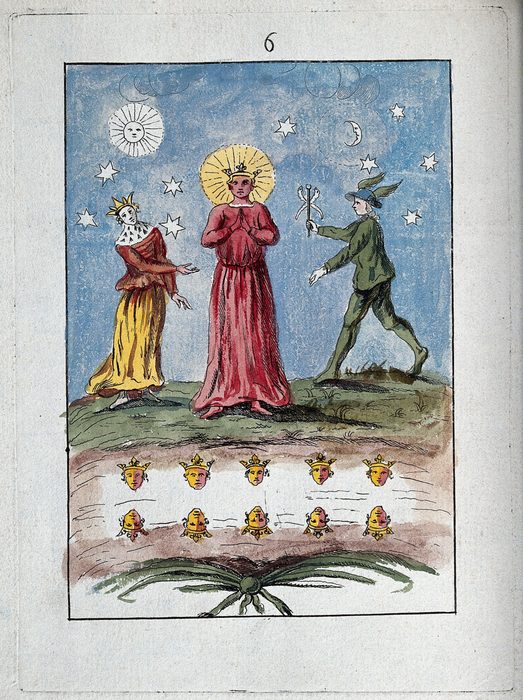
In the same series
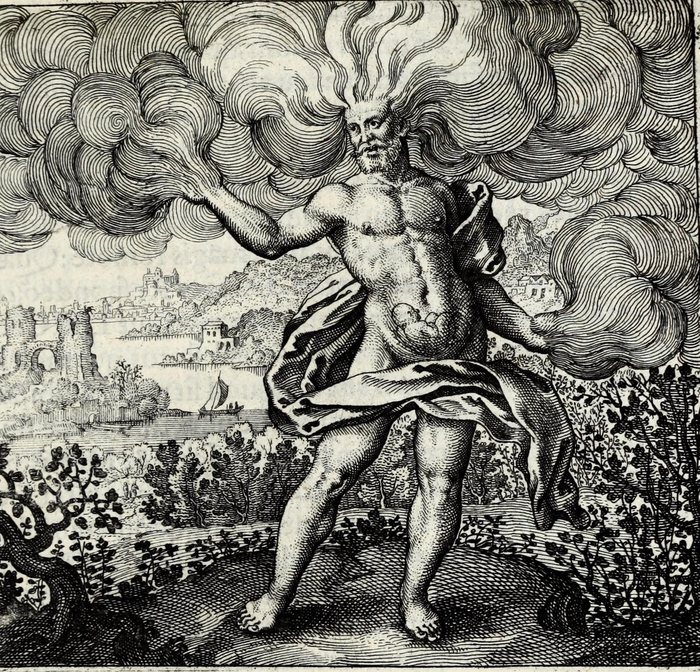 Portavit eum ventus in ventre suo
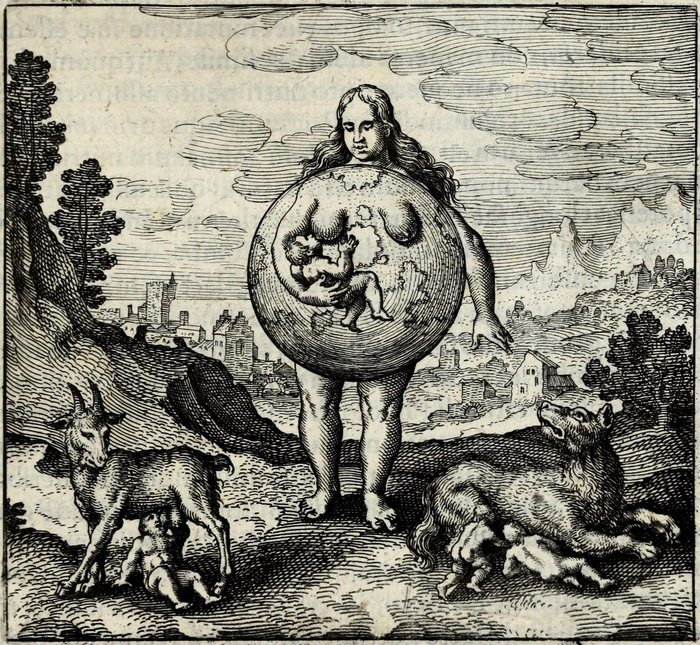 Nutrix ejus terra est
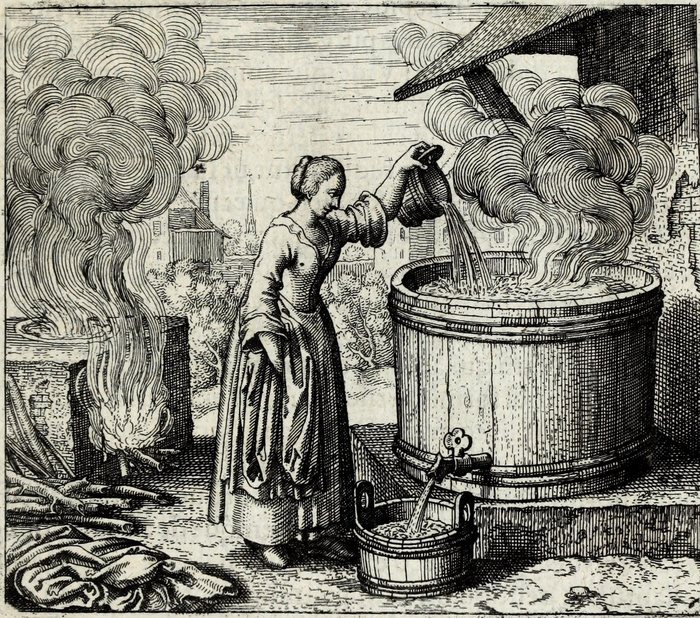 Vade ad mulierem lavantem pannos, tu fac similiter
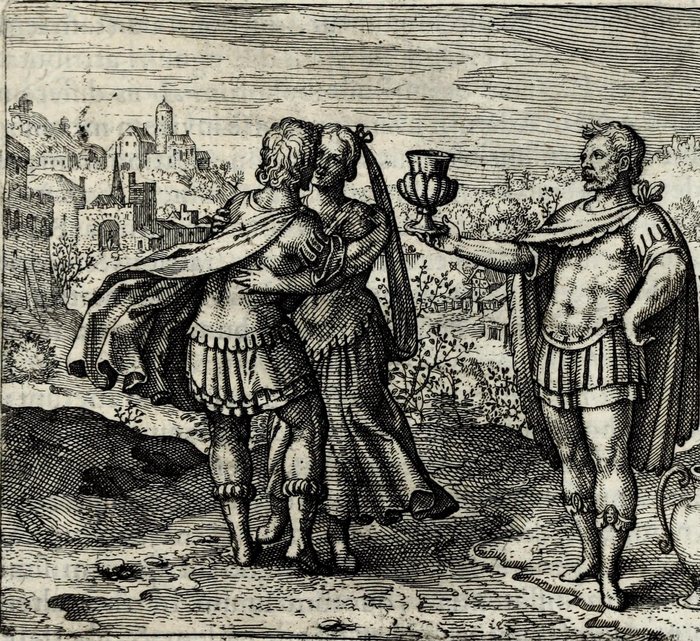 Conjunge fratrem cum sorore & propina illis poculum amoris
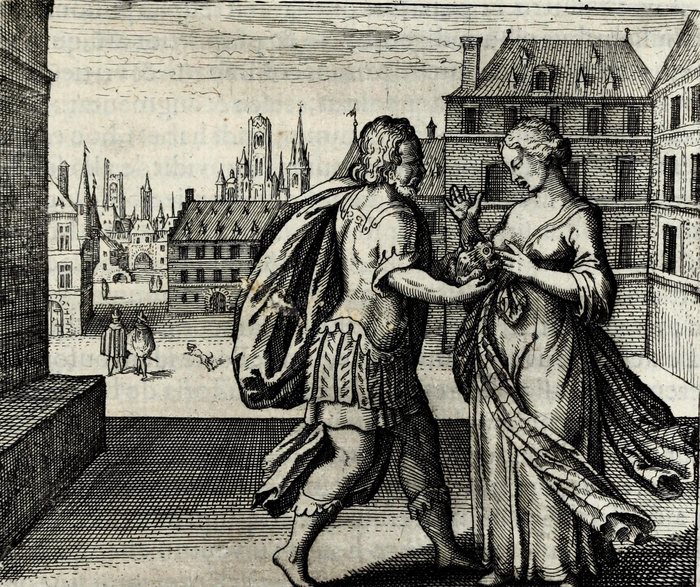 Appone mulieri super mammas bufonem, ut ablactet eum, & moriatur mulier, sitque bufo grossus de lacte
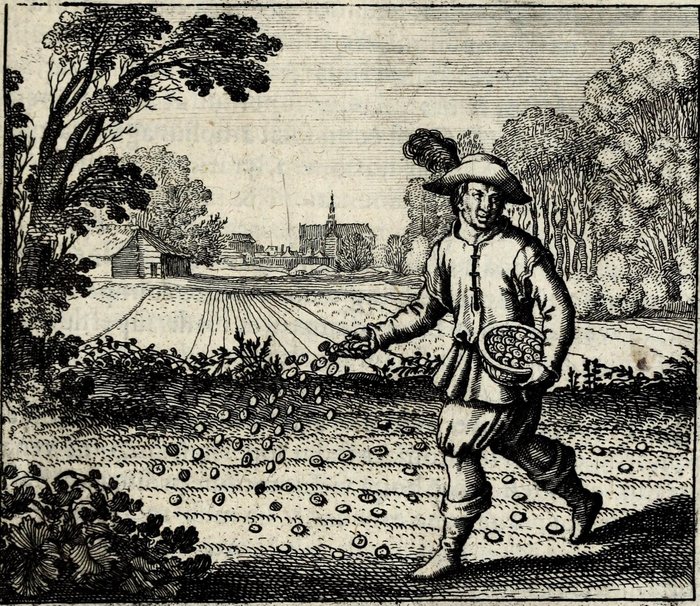 Seminate aurum vestrum in terram albam foliatam
Record
One symbol a week, decoded.
This picture is free at full size from its source, linked above. What an address gets is the Sunday letter: one picture, one symbol marked on it, what it meant and who said so, and the master files of the decoded plates as they are verified. Leave any time.
Free, one letter a week, unsubscribe in one click. How the address is used.
Scroll or pinch to zoom · drag to move · double-tap for 1:1 · 1400 by 1234 pixel web copy; the source file is linked under Record