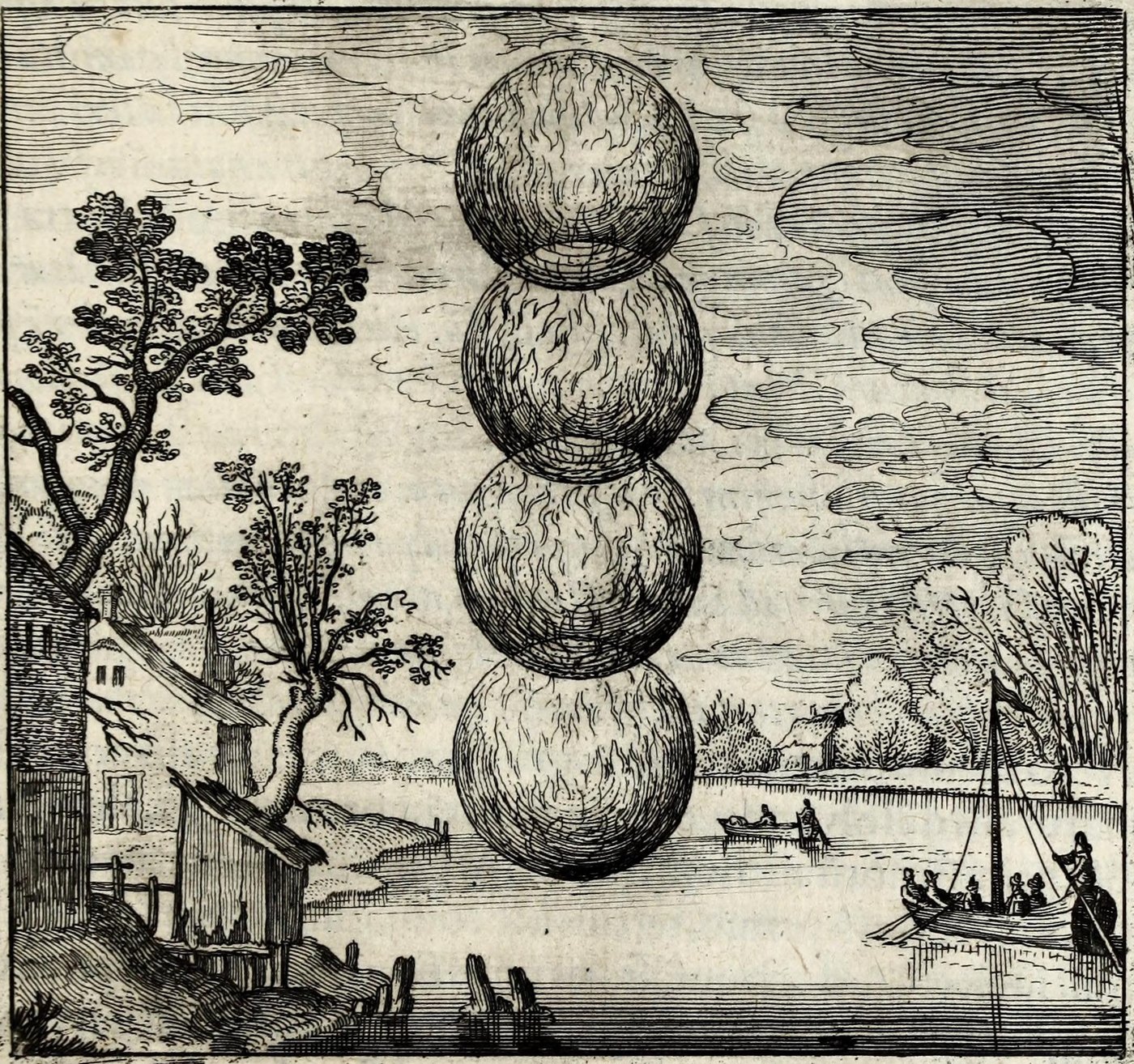
Orbita quadruplex hoc regit ignis opus
The Heavens as the central motif, with Fire in a secondary part. From Atalanta Fugiens.
What is happening
Michael Maier, 1618 “Orbita quadruplex hoc regit ignis opus.”
Symbolica, 2026 Maier’s Latin, put into English here: A fourfold orbit governs this work of fire.
Michael Maier, 1618 “Naturae qui imitaris opus, tibi quattuor orbes
Quaerendi, interius quos levis ignis agat.
Imus Vulcanum referat, bene monstret at alter
Mercurium, Lunam tertius orbis habet:
Quartus, Apollo, tuus, naturae auditur & ignis,
Ducat in arte manus illa catena tuas.”
Symbolica, 2026 Maier’s epigram, put into English here: You who imitate the work of nature must look for four wheels, driven within by a gentle fire. Let the lowest stand for Vulcan, and the next show Mercury well; the third wheel holds the Moon; the fourth is yours, Apollo, and is called the fire of nature. Let that chain guide your hands in the art.
Key · 2 motifs
Tap a motif on the picture, or a line below. Its note opens under the line, with the reading its author gave it.
- Primary motif
- Secondary motifs · 1
The picture
Four spheres stacked in the sky over a river landscape. By eye
The reading
The picture read whole, in the archive's words, from the sources quoted on the marks. Read on, and the picture follows: the motif under discussion keeps its colour.
‘Orbita quadruplex hoc regit ignis opus’: a fourfold orbit governs this work of fire. Merian stacked four burning globes in the sky like a column, over a river with boats on it, and the landscape goes on as if nothing were happening.
‘Naturae qui imitaris opus, tibi quattuor orbes / Quaerendi’, you who imitate the work of nature must look for four wheels, ‘interius quos levis ignis agat’, driven within by a gentle fire. The four spheres are the wheels, and the fire in them is what turns them.
Then the names, from the bottom. ‘Imus Vulcanum referat’, let the lowest stand for Vulcan; ‘bene monstret at alter / Mercurium’, let the next show Mercury well; ‘Lunam tertius orbis habet’, the third wheel holds the Moon; and the fourth, ‘Apollo, tuus, naturae auditur & ignis’, is yours, Apollo, and is called the fire of nature. Four fires of four kinds, the furnace at the bottom and the sun at the top, and ‘Ducat in arte manus illa catena tuas’, let that chain guide your hands in the art. The fire the workman lights is only the first link.
Decoded: every motif is marked, and each mark carries the reading its author gave it, quoted from the text, or says that it is observed on the picture and not read. The reading above is the archive's own, made from those sources and no others.
A diagram of everything, drawn so that a person can be found inside it. Note where the human figure stands in the scheme.
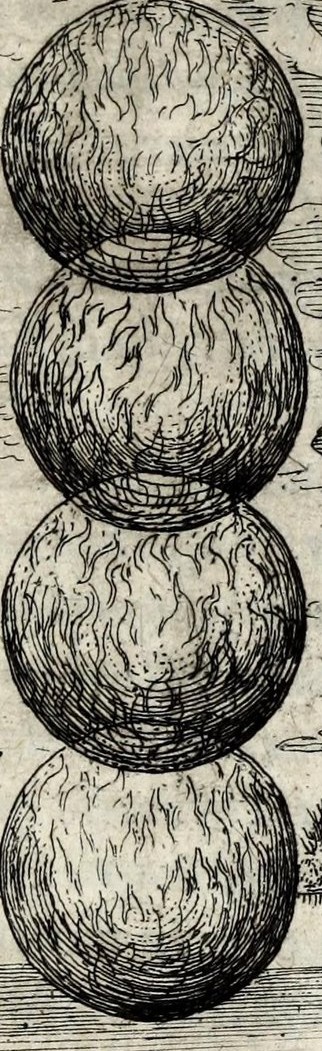
In plain words Four spheres stand one on another in the sky over a river, and each is full of flame. They are the four wheels of the motto, the fourfold orbit that governs the work of fire, and Maier names them from the bottom up: Vulcan, Mercury, the Moon, and Apollo, the fire of nature.
Michael Maier, 1618 “Naturae qui imitaris opus, tibi quattuor orbes / Quaerendi, interius quos levis ignis agat.”
Symbolica Maier's Latin, put into English here: You who imitate the work of nature must look for four wheels, driven within by a gentle fire.
A count, a catastrophe, or the visible part of something that has no body. Note whether the flames are arranged in a number, breaking something, or standing where a figure would be.
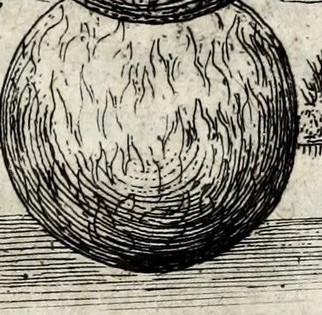
In plain words The lowest sphere is Vulcan's, the plain fire of the furnace. Above it the fire of Mercury, above that the Moon's, and at the top the Sun's, which Maier calls the fire of nature. Four fires in a chain, and the workman's own is the bottom one.
Michael Maier, 1618 “Imus Vulcanum referat, bene monstret at alter / Mercurium, Lunam tertius orbis habet:”
Symbolica Maier's Latin, put into English here: Let the lowest stand for Vulcan, and the next show Mercury well; the third wheel holds the Moon;
Also carrying the Heavens
61 works carry it. The 6 where it is the central motif are here. The symbol.
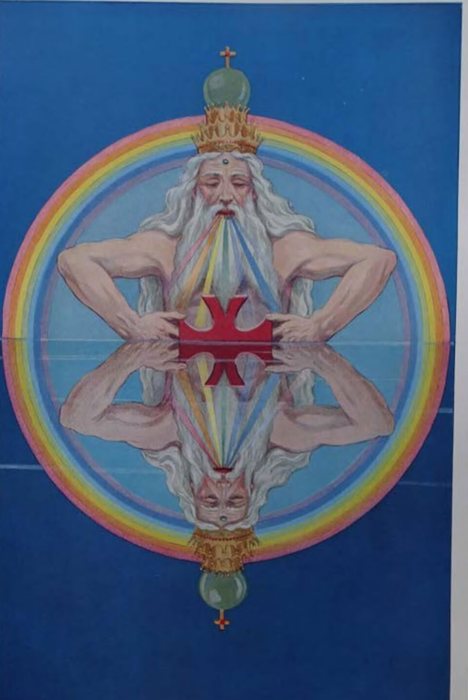
Where the detail is the subject
This is in the picture without being what it is about. Below, one work that is about it.
In the same series
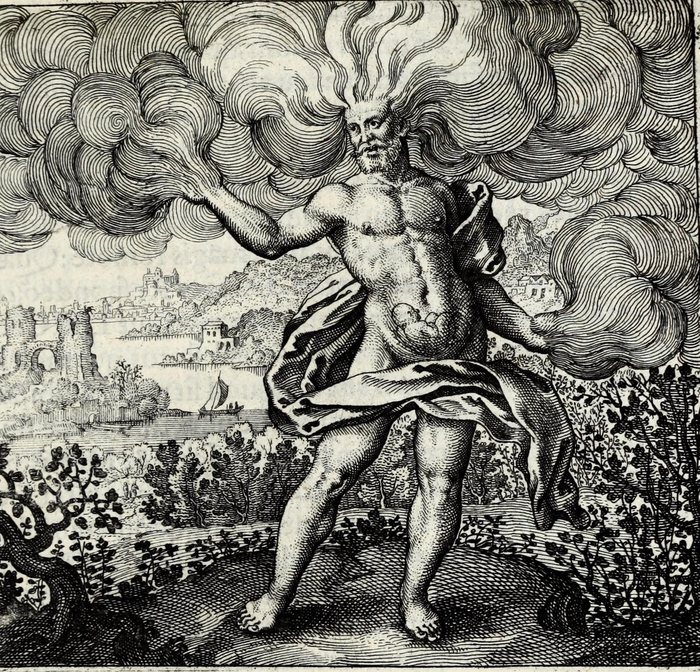 Portavit eum ventus in ventre suo
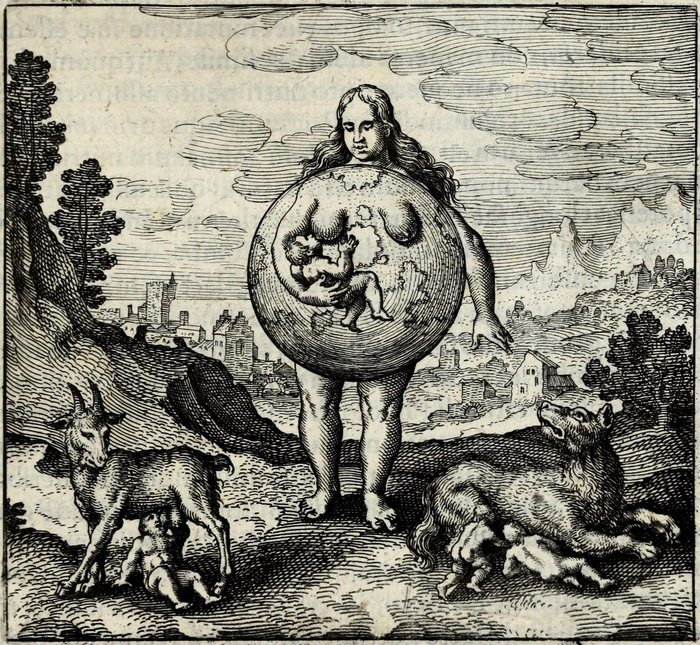 Nutrix ejus terra est
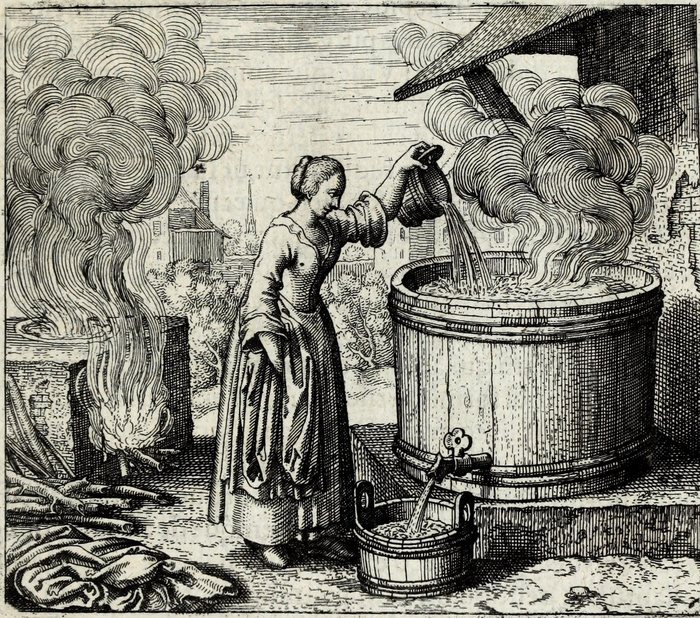 Vade ad mulierem lavantem pannos, tu fac similiter
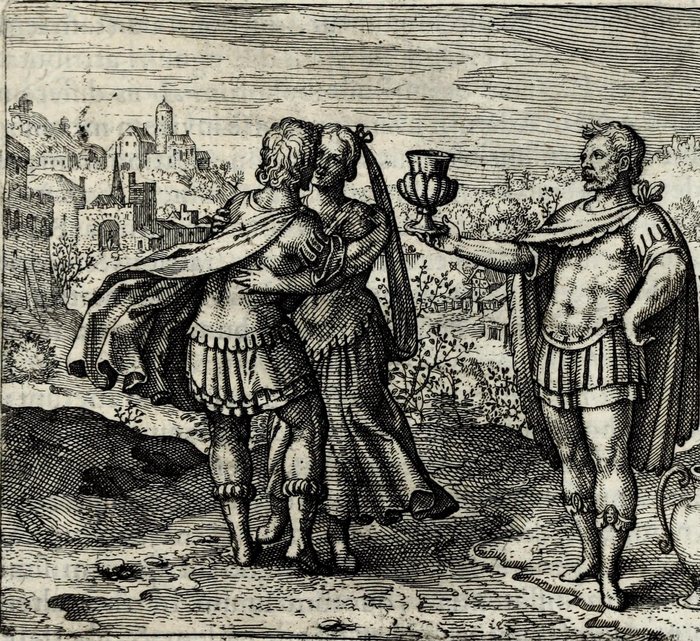 Conjunge fratrem cum sorore & propina illis poculum amoris
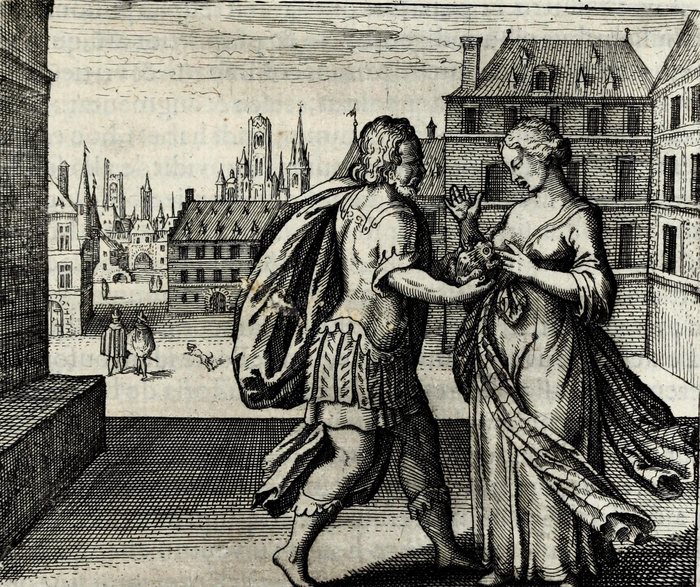 Appone mulieri super mammas bufonem, ut ablactet eum, & moriatur mulier, sitque bufo grossus de lacte
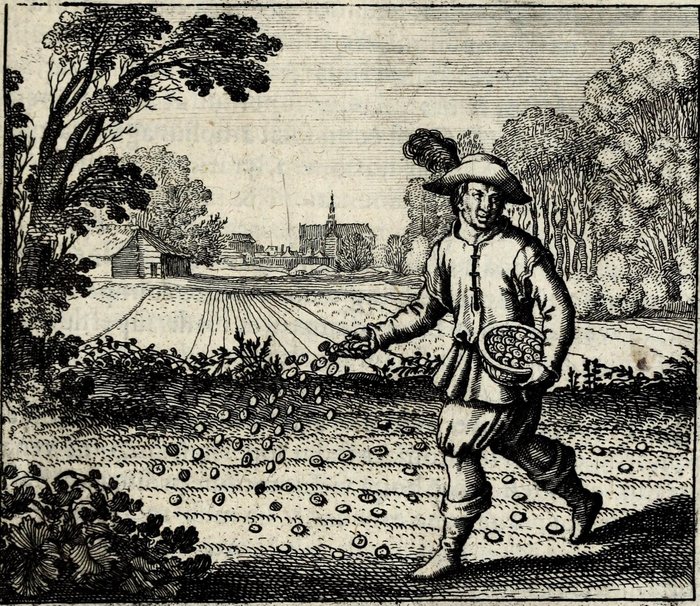 Seminate aurum vestrum in terram albam foliatam
Record
One symbol a week, decoded.
This picture is free at full size from its source, linked above. What an address gets is the Sunday letter: one picture, one symbol marked on it, what it meant and who said so, and the master files of the decoded plates as they are verified. Leave any time.
Free, one letter a week, unsubscribe in one click. How the address is used.
Scroll or pinch to zoom · drag to move · double-tap for 1:1 · 1400 by 1314 pixel web copy; the source file is linked under Record