Theorem XI: the monad with its parts named
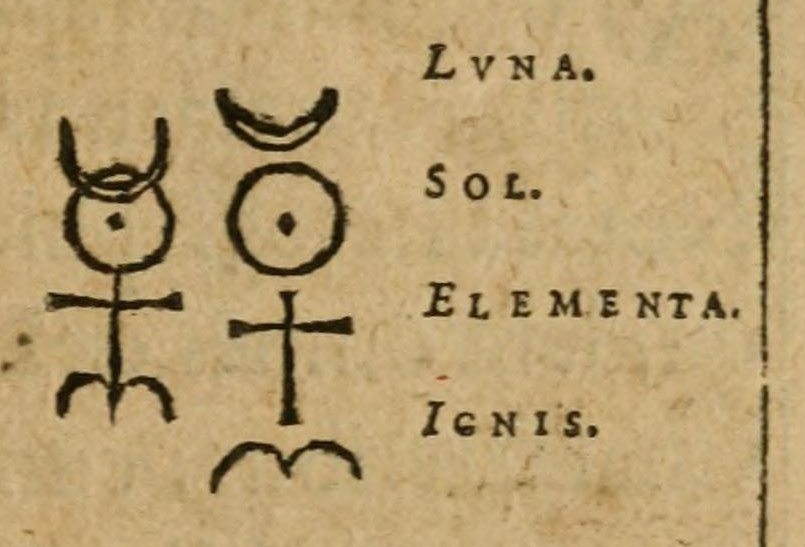
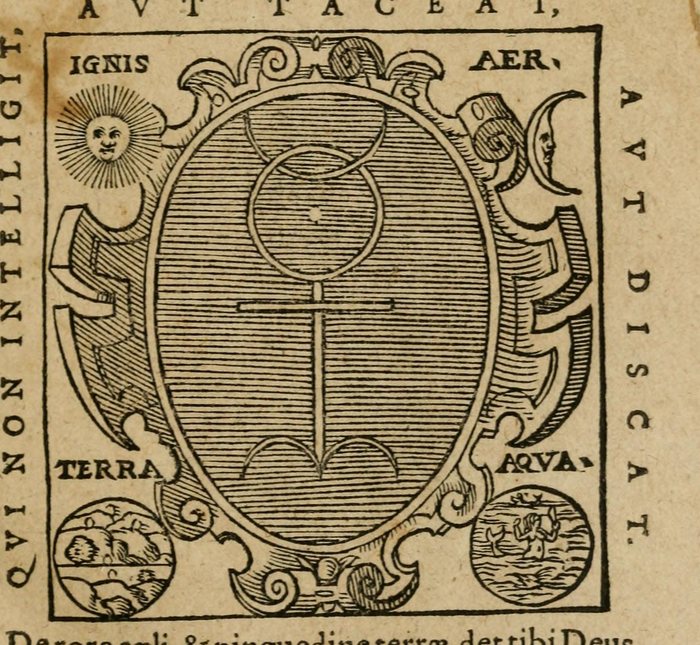
The Sun and the Moon as the central motif, with Fire in a secondary part. From Monas Hieroglyphica.
What is happening
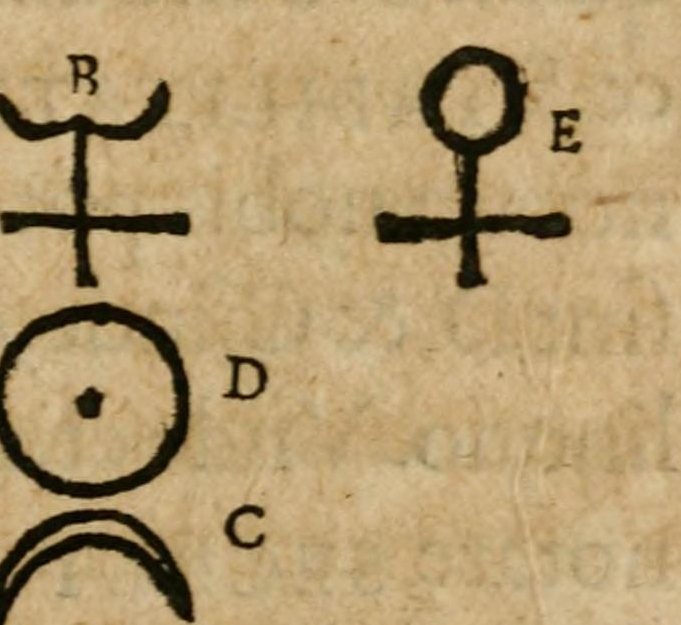
Symbolica, 2026 Dee's Latin, put into English here: Of this Monad, the Moon and the Sun wish their elements to be separated, in which the tenfold proportion will prevail; and that this be done by the ministry of fire. And: the mystical sign of Aries, made of two semicircles joined at a common point. The labels beside the figure name its parts: the crescent is the Moon, the circle the Sun, the cross the Elements, and the sign of Aries at the foot is Fire.
Key · 2 motifs
Tap a motif on the picture, or a line below. Its note opens under the line, with the reading its author gave it.
- Primary motif
- Secondary motifs · 1
The picture
The monad drawn twice, the parts lettered beside it, Luna, Sol, Elementa, Ignis, the moon, the sun, the elements and fire. By eye
The reading
The picture read whole, in the archive's words, from the sources quoted on the marks. Read on, and the picture follows: the motif under discussion keeps its colour.
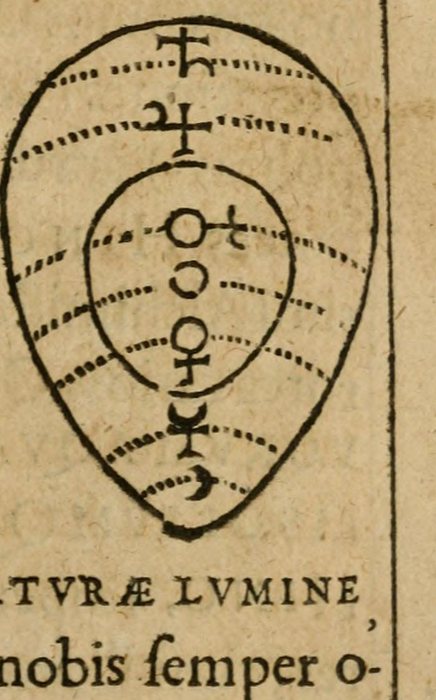
‘Arietis nota mystica, ex duobus semicirculis, in communi puncto connexis, constituta’: the mystical sign of Aries, made of two semicircles joined at a common point. Dee spends the eleventh theorem on the bottom of the glyph, and his figure draws the whole sign twice, once plain and once with every part named down its side.
‘Luna. Sol. Elementa. Ignis.’ The crescent at the top takes the Moon; the circle with the point takes the Sun; the cross takes the Elements; the two half-circles at the foot take Fire. Beside the figure, in capitals, Dee gives the rule the parts obey: ‘Monadis istius, Luna et Sol, sua separari volunt elementa, in quibus denaria vigebit proportio; idque ignis fieri ministerio’, the Moon and the Sun of this Monad wish their elements to be separated, in which the tenfold proportion will prevail, and that this be done by the ministry of fire. Moon and sun at the top, elements in the middle, fire at the foot: the sign reads downward as a recipe.
Aries takes the fire because the sun enters it at the spring equinox, at the head of the year, and because two half-circles joined at a point draw what a geometer can make of a flame. Dee's word, ministerio, ministry, casts the fire as the servant that does the separating, and he sets it under the cross of the elements the way a fire sits under a vessel.
Dee prints the two figures side by side in the text, and the archive keeps them at the size of the page.
Decoded: every motif is marked, and each mark carries the reading its author gave it, quoted from the text, or says that it is observed on the picture and not read. The reading above is the archive's own, made from those sources and no others.
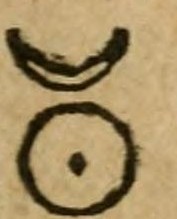
Gold, the perfected metal, and the illuminated intellect. The most overloaded symbol in the tradition.
In plain words The glyph is drawn twice, once whole and once with its parts named. The labels go down the right side: Luna for the crescent, Sol for the circle with its point, Elementa for the cross, Ignis for the sign of Aries at the foot. The text beside them says that the Moon and the Sun of the monad wish their elements to be separated, and that fire does it.
John Dee, 1564 “Luna. Sol. Elementa. Ignis.”
John Dee, 1564 “Monadis istius, Luna et Sol, sua separari volunt elementa, in quibus denaria vigebit proportio; idque ignis fieri ministerio.”
Symbolica Dee's Latin, put into English here: Of this Monad, the Moon and the Sun wish their elements to be separated, in which the tenfold proportion will prevail; and that this be done by the ministry of fire.
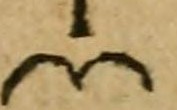
A count, a catastrophe, or the visible part of something that has no body. Note whether the flames are arranged in a number, breaking something, or standing where a figure would be.
In plain words The bottom of the glyph is two half-circles meeting at a point, which Dee calls the mystical sign of Aries and labels fire. It is where the separation of the moon and the sun from their elements is done: by the ministry of fire, the text says, and the picture puts the fire under everything else.
John Dee, 1564 “Arietis nota mystica, ex duobus semicirculis, in communi puncto connexis, constituta.”
Symbolica Dee's Latin, put into English here: the mystical sign of Aries, made of two semicircles joined at a common point.
Symbolica Ignis is fire; the label stands beside the sign of Aries at the foot of the second figure.
Also carrying the Sun and the Moon
59 works carry it. The 6 where it is the central motif are here. The symbol.
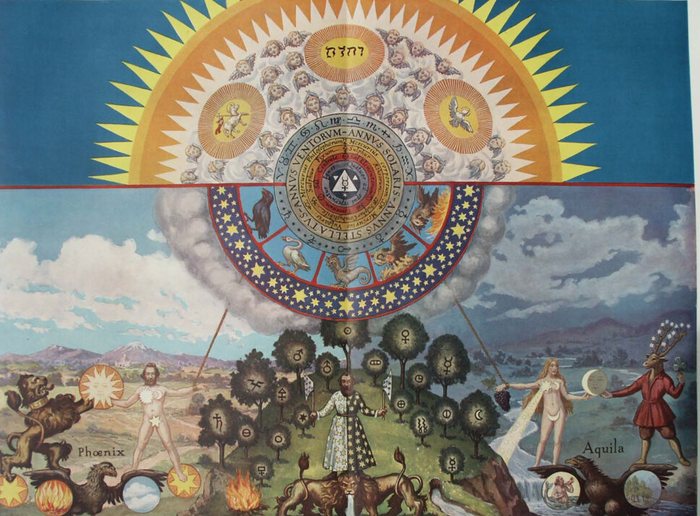
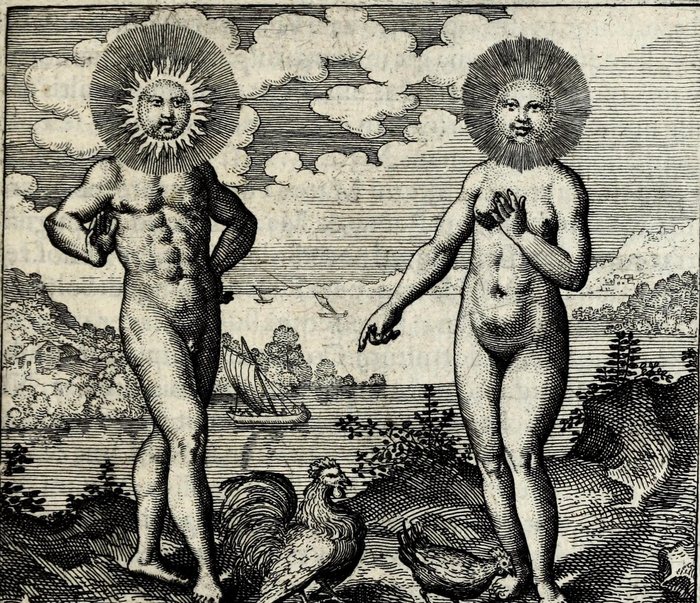
Where the detail is the subject
This is in the picture without being what it is about. Below, one work that is about it.
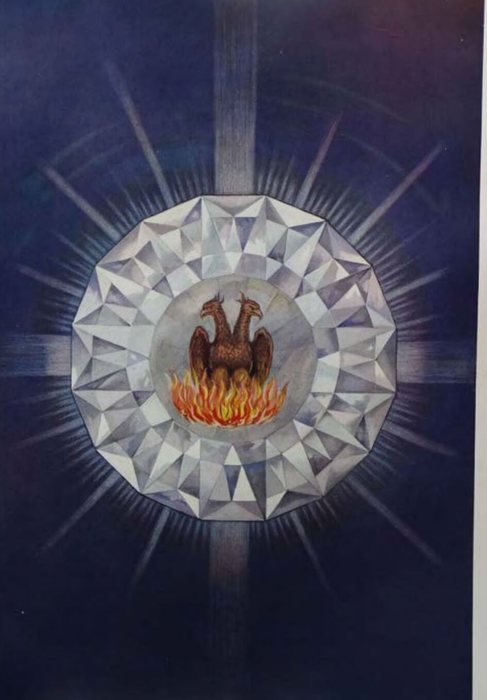
In the same series
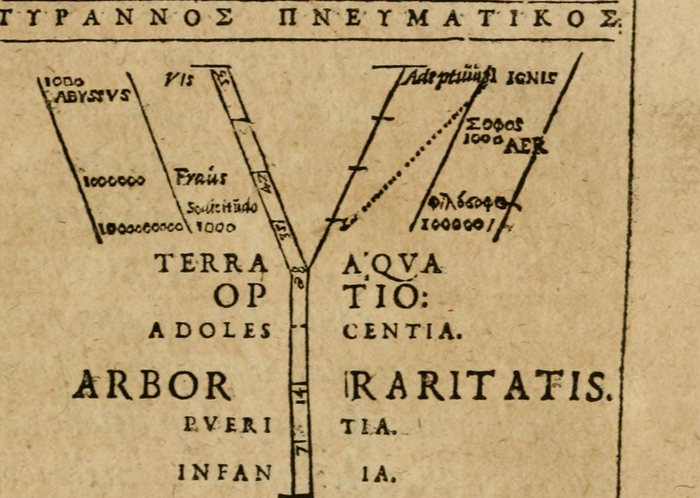
Record
One symbol a week, decoded.
This picture is free at full size from its source, linked above. What an address gets is the Sunday letter: one picture, one symbol marked on it, what it meant and who said so, and the master files of the decoded plates as they are verified. Leave any time.
Free, one letter a week, unsubscribe in one click. How the address is used.
Scroll or pinch to zoom · drag to move · double-tap for 1:1 · 805 by 547 pixel web copy; the source file is linked under Record