John Dee
mathematician, astrologer and adviser to Elizabeth I, 1527 to 1608 or 1609, who designed the hieroglyphic monad and wrote the theorems that explain it.
Readings given
23 passages on 7 pictures in the archive, from Monas Hieroglyphica.
-
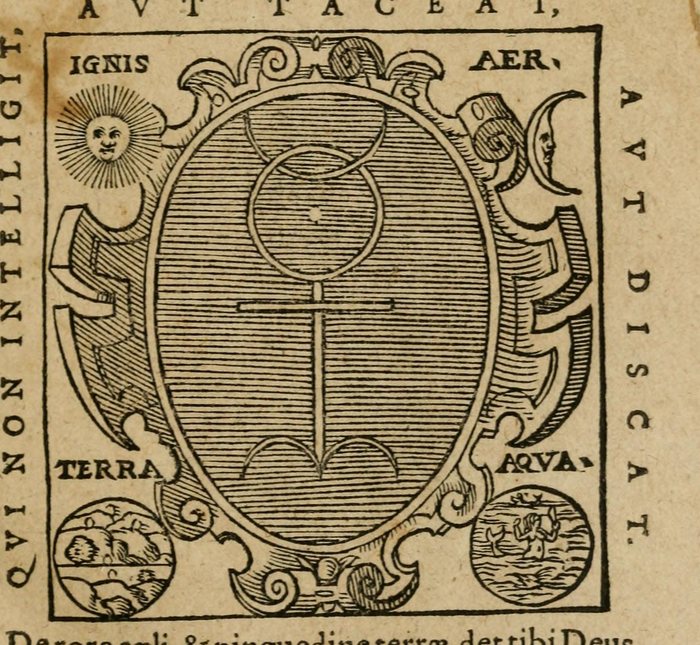
Monas Hieroglyphica, the hieroglyphic monad on the title
the title, the motto engraved round the frame
“Qui non intelligit, aut taceat, aut discat.”
the title, beneath the frame
“De rore caeli, et pinguedine terrae, det tibi Deus. Genes. cap. 27.”
lettered at the four corners of the frame
“Ignis. Aer. Terra. Aqua.”
Theorem XI, the lines set in capitals beside the figure
“Monadis istius, Luna et Sol, sua separari volunt elementa, in quibus denaria vigebit proportio; idque ignis fieri ministerio.”
Theorem XI, its opening
“Arietis nota mystica, ex duobus semicirculis, in communi puncto connexis, constituta.”
-
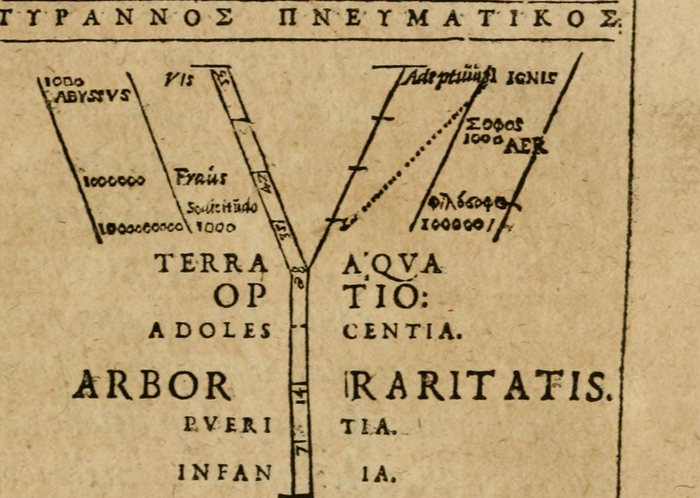
the dedication to Maximilian, lettered on the figure
“Arbor Raritatis.”
the dedication, the line above the figure
“Mysteria: ex nostris hoc modo descripta Cosmopoliticis Theoriis.”
lettered along the trunk, from the root up
“Infantia. Pueritia. Adolescentia. Optio.”
lettered at the fork, the left branch and the right
“Terra. Aqua.”
up the left branch, the branch of earth, with numbers in the thousands and millions beside them
“Abyssus. Fraus. Sollicitudo. Vis.”
up the right branch, the branch of water, in Greek and Latin and transliterated here, with Aer and Ignis lettered beside the last two and the numbers thinning as they climb
“Philosophos. Sophos. Adeptivus.”
in Greek along the top of the figure, transliterated here
“Tyrannos pneumatikos.”
-
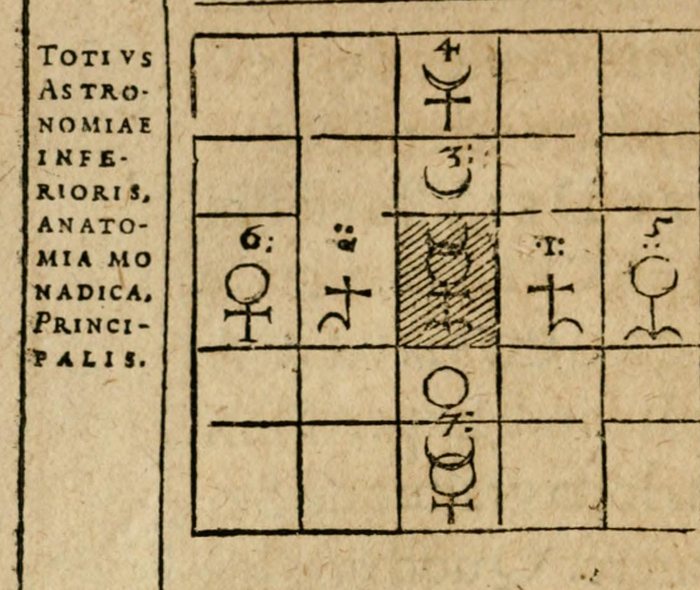
Theorem XIV: the anatomy of the monad, the planets drawn out of it
Theorem XIII, the label set beside the grid
“Totius astronomiae inferioris anatomia Monadica principalis.”
Theorem XIIII, its opening
“Ex Sole et Luna, totum hoc pendere Magisterium iam clare confirmatum est. Huius, etiam Termaximus ille Hermes, nos olim admonuit: eius Patrem Solem esse, asserens: Lunam autem, Matrem: nutriri vero scimus in Terra Lemnia.”
-
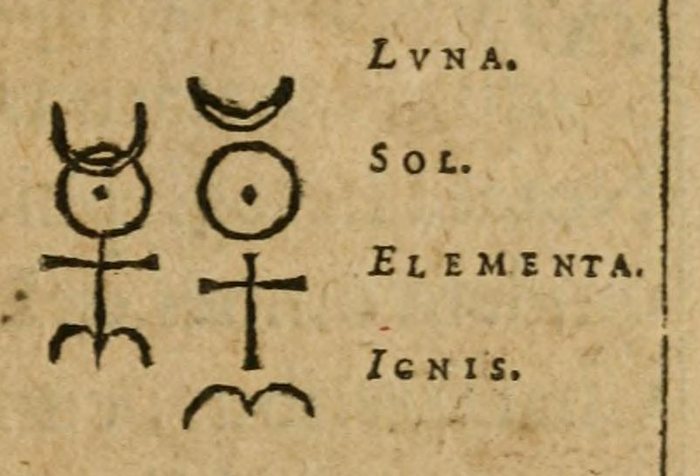
Theorem XI: the monad with its parts named
Theorem XI, the lines set in capitals beside the figure
“Monadis istius, Luna et Sol, sua separari volunt elementa, in quibus denaria vigebit proportio; idque ignis fieri ministerio.”
Theorem XI, its opening
“Arietis nota mystica, ex duobus semicirculis, in communi puncto connexis, constituta.”
lettered beside the second figure, naming its parts from the top down
“Luna. Sol. Elementa. Ignis.”
-
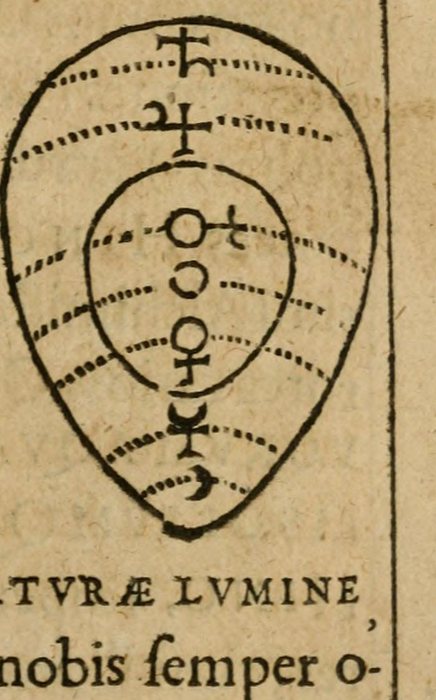
Theorem XVIII: the monad within the egg
Theorem XVIII, its opening
“Ex duodecimo et decimotertio Theorematibus nostris colligi potest, Caelestem Astronomiam, inferioris esse quasi Parentem et Magistram.”
Theorem XVIII, on the figure
“Talem ad amussim nostrae Monadis conspiciemus Anatomiam: in Naturae lumine vitaque sese sic nobis semper ostendentem.”
Theorem XIIII, its opening
“Ex Sole et Luna, totum hoc pendere Magisterium iam clare confirmatum est. Huius, etiam Termaximus ille Hermes, nos olim admonuit: eius Patrem Solem esse, asserens: Lunam autem, Matrem: nutriri vero scimus in Terra Lemnia.”
-
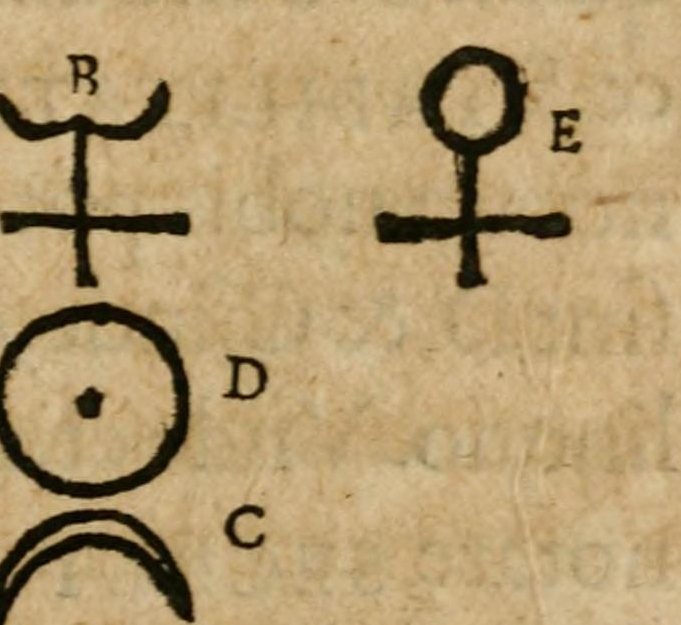
Theorem XX: the monad divided into its members
Theorem XX, on the figure
“Distribuamus igitur Monadem, (hoc novo modo locatam) in anatomica membra B. D. C.”
-
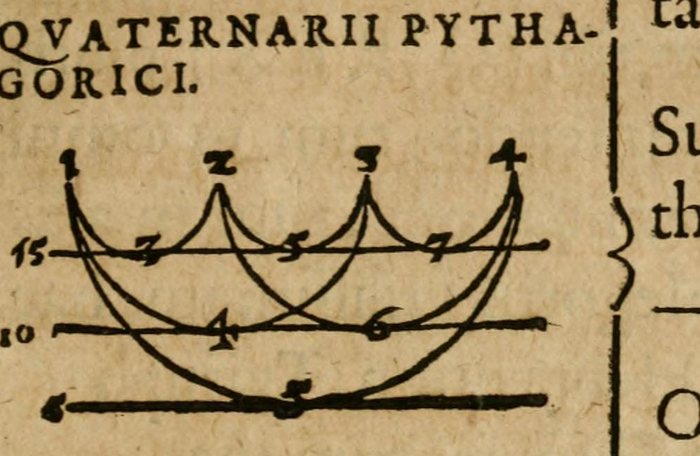
lettered above the figure
“Quaternarii Pythagorici.”
beside the figure
“Omnis possibilis Metathesis, 24. Summa Pythagorica, 10. Omnimoda partium additio, dat 30.”