The Demiurge
Yaldabaoth, Ialdabaoth, Saklas, Samael, the craftsman
The maker of the world, and the one name in this field with no picture of its own. The texts describe him at length. Nobody drew him and signed it, so what circulates under the name was made by other people for other reasons.
Search the name and three pictures come back, and not one of them is him.
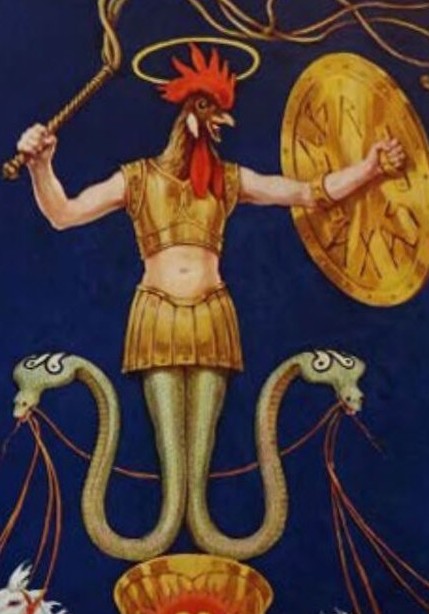
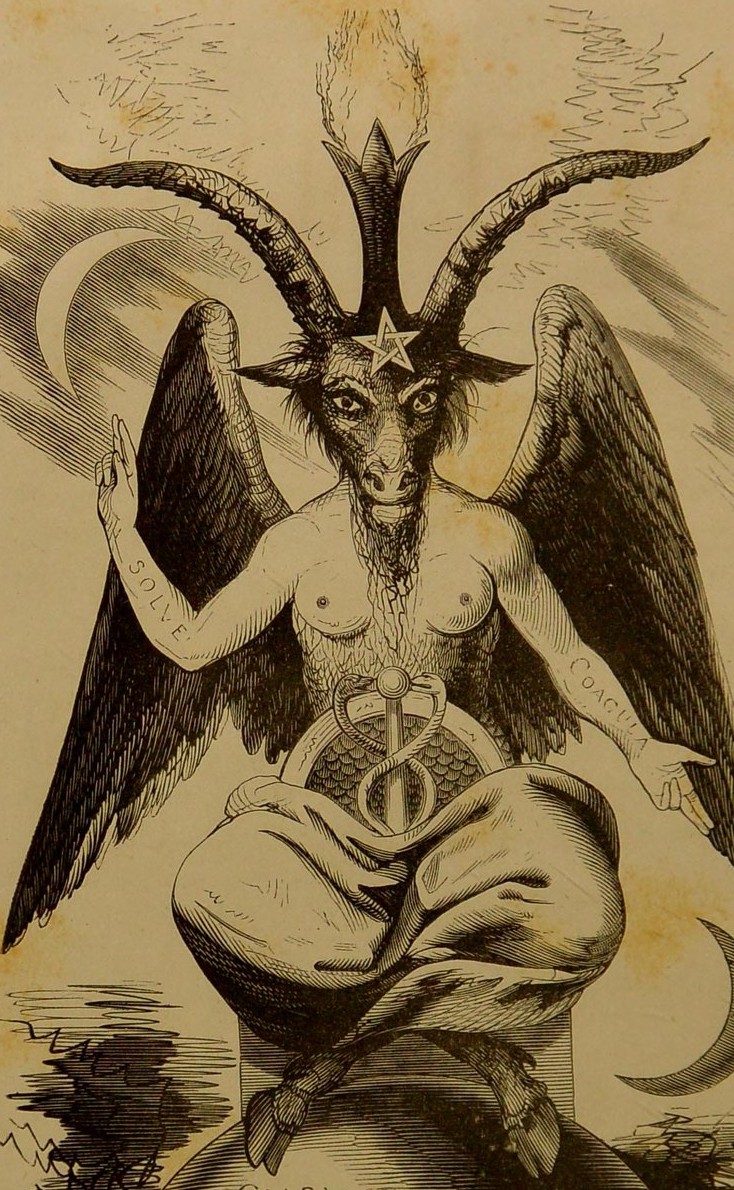
The first is Abraxas, the cock-headed figure with serpents for legs, who belongs to Basilides of Alexandria and to a set of engraved gems small enough to wear. The second is Lévi's Baphomet of 1856, which Lévi drew himself and glossed himself and which is about the union of opposites. This collection holds both, and its entries on both say plainly that neither is the Demiurge. The third is Blake, and the third one does something.
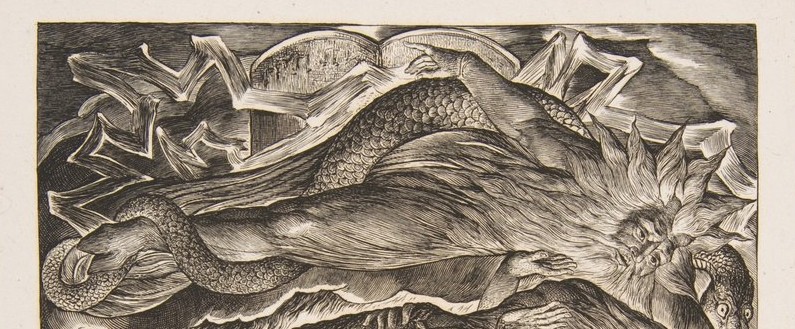
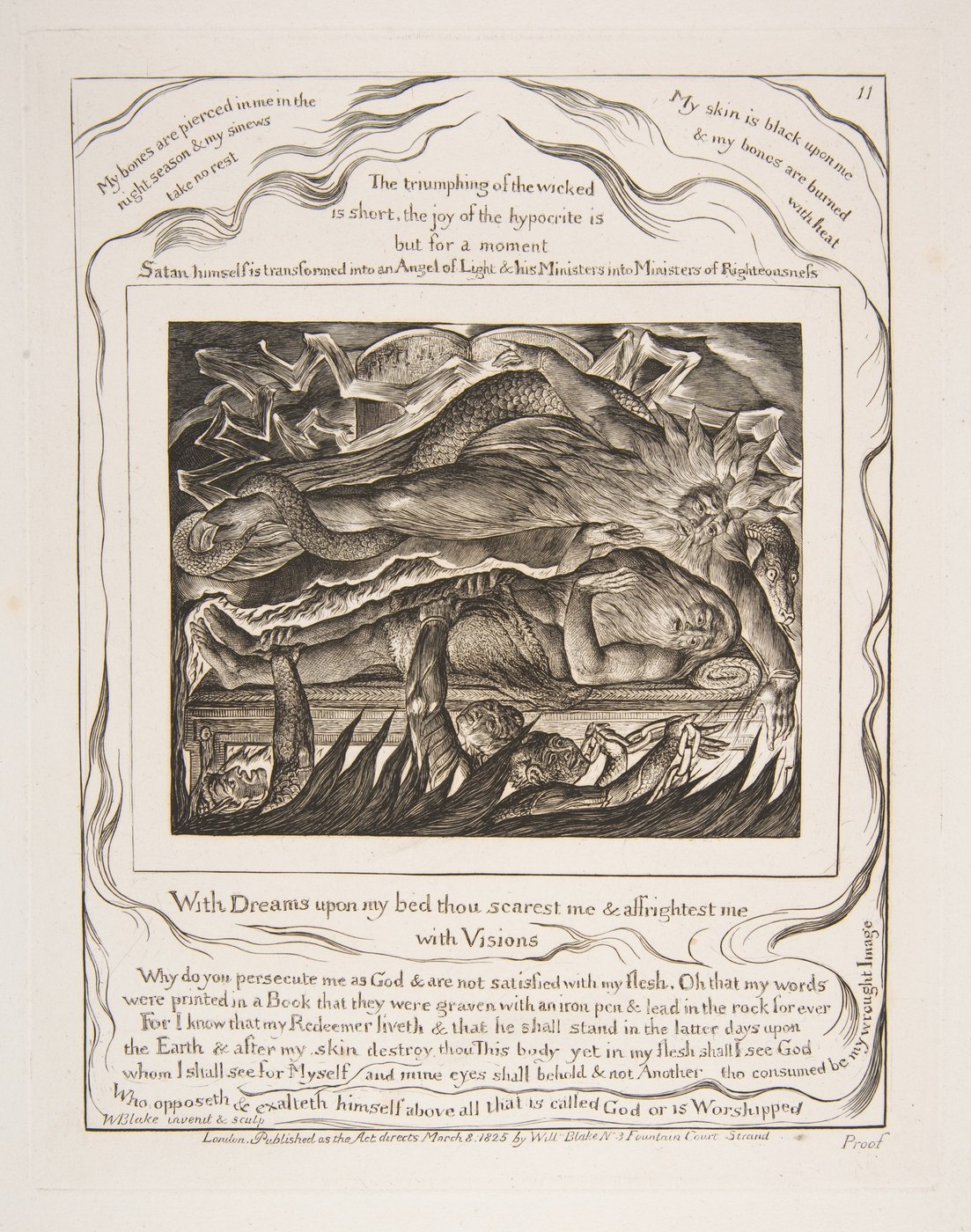
Blake's eleventh Job plate of 1825 puts a bearded figure stretched over Job's bed, one hand pointing down at the sleeper and the other at two stone tablets, a serpent wound round his body and his arm, flames along the bottom edge with hands reaching up out of them. The figure has a cloven hoof. It has the shape of God and the posture of God and it is delivering the law, and it is the accuser. Blake did not leave that to be worked out. He engraved his reason into the margin of his own plate: Satan himself is transformed into an Angel of Light, and his Ministers into Ministers of Righteousness. And at the foot: Who opposeth and exalteth himself above all that is called God or is Worshipped.
That is a maker drawing the god of the law as the enemy and writing down why, on the plate, in his own hand. It is the whole of what a picture of the Demiurge would have to do. It is also not a picture of Yaldabaoth. Blake never used the word, his quarrel is with the God of the moral law rather than with a second-century cosmology, and this collection files the plate here because it is the nearest thing it holds to the idea, not because the two are the same.
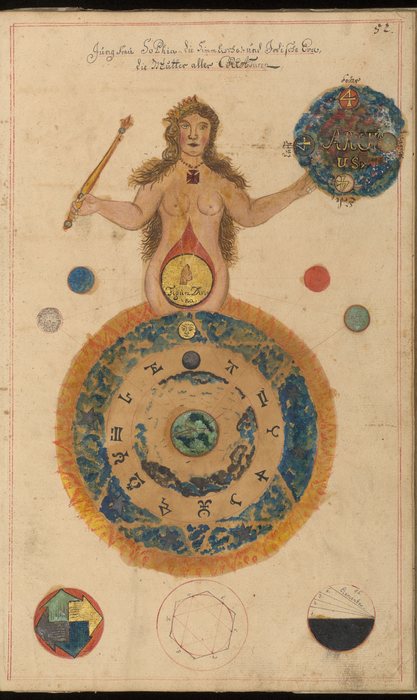
The idea itself lives in texts. The Greek word means a craftsman, and in Plato it is the maker who builds the world by looking at what is perfect. The systems of the second century turn him: the maker becomes ignorant of what is above him, and Sophia's fall is what produces him. That account survives in the Nag Hammadi codices and not in any picture with a name on it.
Which is the honest answer to the search, and it is worth more than a substitute. Nobody drew him. Blake came at the same god from a different direction and put his reason on the plate.
Contested
Sources
- William Blake, Illustrations of the Book of Job, 1825: Plate 11, the two texts Blake engraved on the plate itself, one across the head and one along the foot.
- Manly P. Hall, The Secret Teachings of All Ages, 1928: On Basilides and Abraxas, kept separate from the Demiurge throughout.
- Éliphas Lévi, Dogme et Rituel de la Haute Magie, 1856: His own explanation of the Baphomet he drew, which names neither a demiurge nor a maker of the world.
On the same plate
Where it appears · 4
4 works in the archive carry the Demiurge. First the 4 where it has been read, with the Demiurge itself picked out.