Andrea Alciato
Milanese jurist whose Emblemata, first gathered in 1531, set the pattern every emblem book after it followed: a motto, a picture and an epigram, printed together so that none of the three can be read alone; this is the Antwerp printing of 1648.
Readings given
11 passages on 3 pictures in the archive, from Emblemata.
-
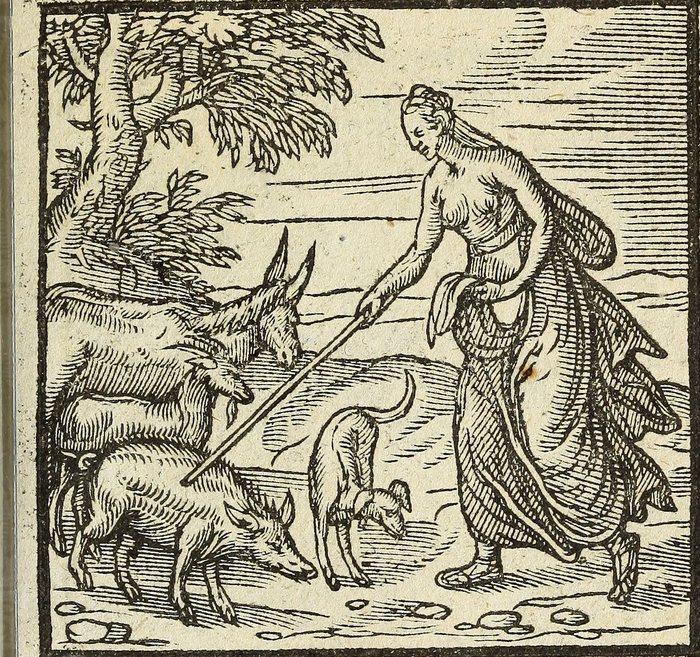
Emblema LXXVI, page 95, the motto printed over the woodcut
“Cauendum à meretricibus.”
Emblema LXXVI, page 95, the six lines printed under the woodcut
“Sole sata Circes tam magna potentia fertur, / Verterit ut multos in noua monstra viros. / Testis equûm domitor Picus, tum Scylla biformis, / Atque Ithaci postquam vina bibere sues. / Indicat illustri meretricem nomine Circe, / Et rationem animi perdere, quisquis amat.”
Emblema LXXVI, page 95, the first two lines of the epigram
“Sole sata Circes tam magna potentia fertur, / Verterit ut multos in noua monstra viros.”
Emblema LXXVI, page 95, the fourth line of the epigram
“Atque Ithaci postquam vina bibere sues.”
-
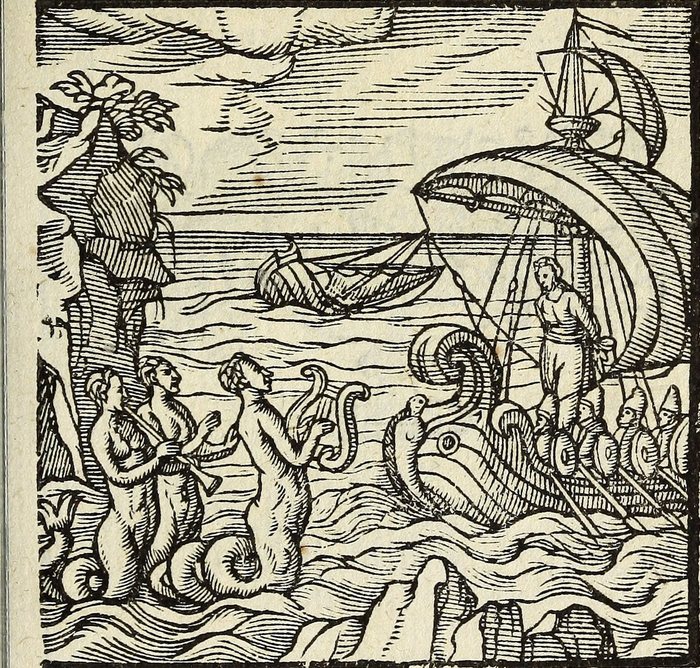
Emblema CXV, page 139, the motto printed over the woodcut
“Sirenes.”
Emblema CXV, the epigram printed under the woodcut on page 139 and running on to page 140; the catchword at the foot of 139 is Illicium, the first word of the continuation
“Absque alis volucres, & cruribus absque puellas, / Rostro absque & pisces, qui tamen ore canant, / Quis putat esse ullos? iungi hæc Natura negauit: / Sirenes fieri sed potuisse docent. / Illicium est mulier, quæ in piscem desinit atrum, / Plurima quòd secum monstra libido vehit. / Aspectu, verbis, animi candore trahuntur, / Parthenope, Ligia, Leucosiaque viri. / Has Musæ explumant, has atque illudit Vlysses: / Scilicet est doctis cum meretrice nihil.”
Emblema CXV, the epigram continued on page 140, its first line
“Illicium est mulier, quæ in piscem desinit atrum,”
Emblema CXV, page 139, the first four lines of the epigram
“Absque alis volucres, & cruribus absque puellas, / Rostro absque & pisces, qui tamen ore canant, / Quis putat esse ullos? iungi hæc Natura negauit: / Sirenes fieri sed potuisse docent.”
-
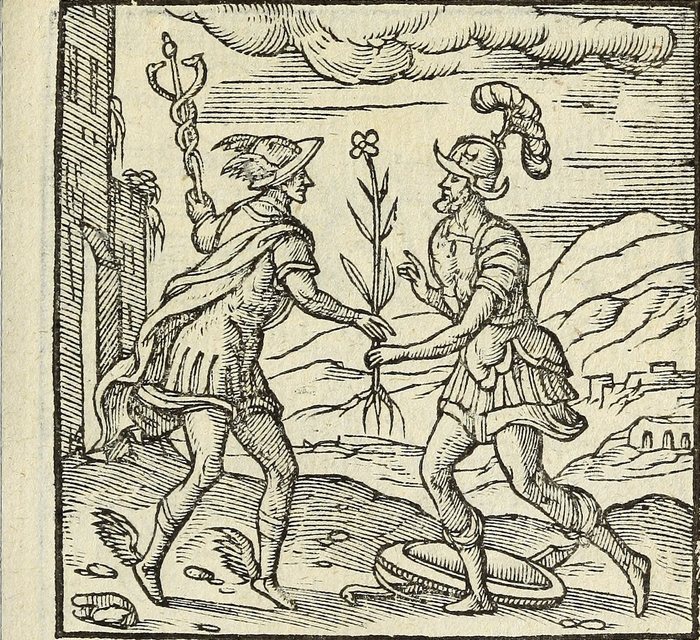
Emblema CLXXXI, page 215, the motto printed over the woodcut
“Facundia difficilis.”
Emblema CLXXXI, page 215, the six lines printed under the woodcut
“Antidotum Ææa medicata in pocula Circes / Mercurium hoc Ithaco fama dedisse fuit. / Moly vocant: id vix radice euellitur atrâ, / Purpureus sed flos, lactis & instar habet. / Eloquij candor facundiaque allicit omnes: / Sed multi res est tanta laboris opus.”
Emblema CLXXXI, page 215, the first two lines of the epigram
“Antidotum Ææa medicata in pocula Circes / Mercurium hoc Ithaco fama dedisse fuit.”